

Mr. Wang, a beauty brand owner, has been troubled lately: last month, he partnered with a Guangdong cosmetics OEM factory. The sample’s skin feel and packaging met the standards, but after 500,000 facial masks were delivered in bulk, excessive microbial content was detected. He not only had to destroy all products but also missed the Double 11 pre-sale, resulting in a direct loss of over 2 million yuan. Ms. Li, an e-commerce seller, encountered a similar issue. She chose a low-cost factory in Baiyun District, Guangzhou, to produce liquid foundation, with an agreed delivery time of 45 days. However, the delivery was delayed by 3 months, ruining her peak-season sales.
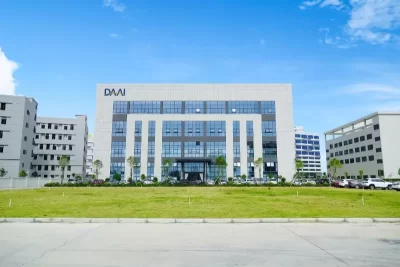
As the core of China’s cosmetics industry, Guangdong undertakes 62% of the national cosmetics production capacity (Data source: 2025 Annual Report of Guangdong Provincial Drug Administration). Baiyun District of Guangzhou, Longhua District of Shenzhen, and Nanhai District of Foshan alone gather more than 2,800 certified manufacturing enterprises, accounting for 58% of the national total. Known as “China’s Beauty Core Area,” Baiyun District had 576 above-scale cosmetics enterprises (covering industrial, construction, wholesale/retail, accommodation/catering, and service sectors) in the first quarter of 2025, with a combined industrial output value and sales volume of 8.887 billion yuan. However, for brand owners, e-commerce sellers, and physical store owners seeking cooperation with Guangdong cosmetics enterprises, “choosing the right one” is harder than “finding one.” Problems such as qualification fraud, lax quality control, and delayed delivery often waste initial investments.
This article will guide you to quickly identify high-quality cosmetics resources in Guangdong from five dimensions: “pitfall avoidance,” “industrial advantages,” “screening methods,” “communication skills,” and “resource connection.” It also includes a free “Guangdong Cosmetics Partner Screening Checklist” to help you reduce decision-making costs and achieve efficient cooperation.
I. Why Is It Easy to Fall Into Pitfalls When Choosing Guangdong Cosmetics? 3 Real Pain Points to Watch Out For
Many users think, “There are many cosmetics enterprises in Guangdong; you can cooperate with any of them.” However, three common problems arise in actual cooperation. These pain points are summarized from high-frequency feedback after investigating more than 100 beauty industry practitioners:
1. Qualifications “Seem Qualified” but Hide Risks
An e-commerce seller in Dongguan once cooperated with Guangzhou Meipiaoyang Cosmetics Co., Ltd. (License No.: Yue Zhuang 20190035). The provided “Cosmetics Production License” indicated it was “within the validity period,” but subsequent regulatory inspections revealed that the factory’s actual production address did not match the “No. XX Road, Taihe Town, Baiyun District, Guangzhou” stated on the license. This constitutes “off-site production,” violating the Regulations on the Supervision and Administration of Cosmetics, resulting in the seizure of 100,000 products of the seller. Such “qualification fraud” often manifests as:
- The license number cannot be queried on the National Medical Products Administration’s (NMPA) Domestic Cosmetics Production License Information Management System.
- The production scope does not match the actual product category. For example, Guangzhou Chuyan Cosmetics Co., Ltd. (License No.: Yue Zhuang 20160292) only covers ordinary liquid products but undertakes OEM production of freckle-removing products without “special cosmetics production qualifications.”

2. Quality Control: “Sample Meets Standards, but Bulk Production Quality Degrades”
This is the most common pitfall! A brand owner in Hangzhou entrusted Foshan Xiyan Cosmetics Co., Ltd. (License No.: Yue Zhuang 20180190) to produce moisturizing cream. The sample test showed a “moisturizing rate of 48% and no heavy metals detected.” However, during bulk production, the factory secretly replaced “sodium hyaluronate” with low-cost “glycerin,” resulting in a final product moisturizing rate of only 12% and a consumer complaint rate exceeding 30%. The root cause is that the factory has no independent laboratory and only relies on third-party sample testing. To reduce costs during bulk production, it cuts raw materials or simplifies processes, with quality control relying solely on “manual visual inspection.”
3. Production Capacity: “Promises Are Abundant, but Delivery Is Delayed”
A physical store owner in Shenzhen entrusted Xuanliang Daily Chemical (Foshan) Co., Ltd. (License No.: Yue Zhuang 20220161) to produce sunscreen spray before the 618 promotion. The factory promised a “monthly production capacity of 300,000 bottles and delivery within 20 days.” However, due to the failure of second-hand emulsification equipment during actual production, the delivery was delayed by 15 days, missing the promotion period. The store owner not only lost a 50,000-yuan deposit but also lost a large number of customers due to inability to supply goods. Such problems mostly occur in small factories with a monthly production capacity of less than 100,000 units, which lack emergency production capacity reserves. Once facing raw material shortages or equipment failures, delivery is directly affected.
II. Core Advantages of Guangdong Cosmetics: Why Still Choose Guangdong First?
Despite the risk of falling into pitfalls, 80% of beauty industry practitioners still prioritize Guangdong cosmetics. The core lies in Guangdong’s most complete cosmetics industrial ecosystem in China, which is an irreplaceable advantage of other regions:
1. Most Complete Supply Chain Support, More Controllable Costs
Taking Baiyun District, Guangzhou, as an example, a “1-hour industrial circle” has been formed, covering raw material procurement (Xingfa Square gathers more than 2,000 raw material suppliers), packaging production (Shiling, Huadu is a national cosmetics packaging hub), OEM processing, and testing. After COSMAX, the world’s largest cosmetics OEM enterprise, established a factory in Huangpu, Guangzhou, it shortened the raw material procurement cycle to within 48 hours. For example, OEM production of a facial mask in Guangdong can achieve “raw material procurement on the same day + 3 days of production + 2 days of testing,” while other regions may take more than 10 days. The supply chain efficiency is increased by 60%, and the unit cost is 15%-20% lower than that in the Yangtze River Delta region.
2. Strict Policy Supervision, Concentrated High-Quality Enterprises
Since 2024, Guangdong Provincial Drug Administration has implemented “classified supervision of cosmetics production enterprises,” dividing enterprises into four levels: A (high-quality), B (qualified), C (key supervision), and D (dishonest). Currently, there are 320 Class A enterprises, accounting for 11.4%. These enterprises not only have complete qualifications but also need to submit quality control reports every quarter, with higher supervision transparency. For example, Class A enterprises such as Guangzhou Reniana Biotechnology Co., Ltd. (License No.: Yue Zhuang 20200137) and Guangdong Dazhan Biomedical Technology Co., Ltd. (License No.: Yue Zhuang 20210336) have long-term OEM cooperation with leading brands such as CARSLAN and WETHERM, achieving a 100% quality control pass rate in the first quarter of 2025. Adolph, a leading enterprise in Baiyun District, has become a benchmark in scented hair care through the “four modernizations transformation (intellectualization, digital intelligence, greenization, and globalization),” with its output value increasing by 8.8% year-on-year in the first quarter of 2025.
3. Strong Innovation Capability, Fast New Product Iteration
The average R&D investment of Guangdong cosmetics enterprises accounts for 3.2% of their revenue, 1.8 percentage points higher than the national average. Alone in Baiyun District, Guangzhou, more than 120 enterprises have R&D centers at or above the provincial level. For example, “MEIFUBAO,” a brand under HUANYA Group, relies on its R&D base in Baiyun District to transform herbal skincare technology into anti-aging new products, which only takes 2 months from R&D to mass production. The production base of Bloomage Biotechnology in Baiyun has achieved the entire industrial chain innovation from hyaluronic acid raw materials to finished products, with new product launch speed twice as fast as that of northern enterprises.
III. 3 Steps to Screen Reliable Guangdong Cosmetics Partners (With Free Checklist)
Many users think “screening is too complicated,” but in fact, mastering the 3 steps of “qualification verification, quality control validation, and production capacity testing” can quickly eliminate 80% of high-risk partners. Below is a directly usable “Screening Checklist”:
Step 1: Qualification Verification (3 Must-Check Items, Indispensable)
| Verification Items | Verification Methods | Qualification Standards | Reference Cases |
|---|---|---|---|
| Cosmetics Production License | Log in to the NMPA’s Domestic Cosmetics Production License Information Management System and query by license number | 1. Within the validity period (5 years); 2. The production address is consistent with the actual one; 3. The production scope includes the target category | Guangzhou Reniana Biotechnology Co., Ltd. (License No.: Yue Zhuang 20200137): Covers cream, lotion, and powder units, capable of OEM production of color cosmetics |
| Environmental Impact Assessment (EIA) Filing | Check the official website of Guangdong Provincial Department of Ecology and Environment to verify the filing receipt | Filing approved, no environmental penalties | Adolph Group: Zero environmental inspection issues in the first quarter of 2025, Filing No.: 440111XXXXXXX |
| Cooperative Brand Cases | Verify the same-category cooperation records in the past year | Cooperation with at least one well-known brand for ≥6 months | Guangdong Miaodijun Cosmetics Co., Ltd. (License No.: Yue Zhuang 20220144): Undertakes OEM production of facial cleansers for Jialan Beauty, with a cooperation duration of 18 months |
Step 2: Quality Control Validation (2 Practical Methods to Avoid “Sample Fraud”)
- On-site laboratory inspection: Focus on core equipment configuration. For example, the laboratory of Guangzhou Keya Biotechnology Co., Ltd. (License No.: Yue Zhuang 20170420) is equipped with high-performance liquid chromatography (for detecting raw material purity) and microbial incubators (for detecting total bacterial count), enabling real-time monitoring of production links. Small factories without such equipment should be directly eliminated.
- Bulk product sampling testing: Request a CMA (China Metrology Accreditation)-certified test report. For example, each batch of bulk products of Guangzhou Pingshang Biotechnology Development Co., Ltd. (License No.: Yue Zhuang 20190034) is attached with a report from Guangdong Provincial Institute for Drug Control. You can randomly sample and re-test at your own expense to compare data consistency.
Step 3: Production Capacity Testing (Small Trial Order to Avoid “Delayed Delivery”)
For initial cooperation, it is recommended to place a trial order (10% of the target quantity) to test delivery capacity:
- Request a production schedule. For example, Guangdong Alice Cosmetics Co., Ltd. (License No.: Yue Zhuang 20220160) can clearly state “production starts on the 2nd day after raw materials arrive at the factory, and third-party testing is completed on the 5th day.”
- Agree on penalty clauses (e.g., deduct 5% of the deposit for each day of delay), referring to the cooperation contract template of Adolph Group to restrict efficiency through clauses.
IV. 4 Key Communication Phrases with Guangdong Cosmetics Factories to Avoid “Miscommunication”
Many users only ask “how much?” and “when will it be delivered?” when communicating with factories, leading to subsequent disputes. The following 4 key phrases can help you quickly obtain key information, demonstrate professionalism, and make factories attach more importance to cooperation:
- “As a Class A enterprise like Guangzhou Reniana Biotechnology Co., Ltd. (License No.: Yue Zhuang 20200137), can you provide your license number for me to verify on the NMPA? Also, please provide the EIA filing receipts of the past 3 months, thank you.” (Use well-known Class A enterprises as examples to screen factories with incomplete qualifications.)
- “For the oil-sensitive skin repair mask we want to entrust for production, is your raw material procurement channel consistent with that of COSMAX? Can you provide the brand authorization certificate of the hyaluronic acid supplier?” (Benchmark against international OEM enterprises to verify raw material quality.)
- “If we place a 50,000-unit trial order, can your factory’s production schedule meet the standard of Guangdong Dazhan Biomedical Technology Co., Ltd.—completing production + testing within 15 days? Can you provide a production schedule with specific milestones?” (Use efficient enterprises as references to clarify delivery requirements.)
- “During bulk production, can we arrange on-site supervisors like Adolph’s cooperative brands? If quality control issues are found, how are the rework processes and timeframes regulated?” (Based on the cooperation model of leading enterprises to agree on supervision and after-sales services.)
V. 2 Channels to Quickly Connect with High-Quality Guangdong Cosmetics Resources (With Action Entrances)
If you think “self-screening is too time-consuming,” you can directly connect with high-quality Guangdong cosmetics resources through the following 2 channels to improve cooperation efficiency:
1. Obtain the “List of Class A Cosmetics Factories in Guangdong”
We have compiled a complete list of 320 Class A factories announced by Guangdong Provincial Drug Administration in 2025, including contact information and cooperative categories of enterprises such as Guangzhou Reniana Biotechnology Co., Ltd. (License No.: Yue Zhuang 20200137, specializing in color cosmetics OEM) and Guangdong Dazhan Biomedical Technology Co., Ltd. (License No.: Yue Zhuang 20210336, focusing on functional skincare products). Scan the QR code to add the consultant’s WeChat and reply with “Guangdong Class A Factories” to receive it for free, saving time on qualification verification.
2. Free Qualification Verification Service
If you have locked in target factories (such as Foshan Gurusha Cosmetics Co., Ltd. and Guangzhou Fanhua Cosmetics Co., Ltd.), you can provide their names or license numbers. We will verify their qualifications, environmental records, and penalty history within 24 hours. For example, a user once discovered through this service that a factory concealed its 2024 environmental penalty record, successfully avoiding a pitfall.
Conclusion
Although Guangdong’s cosmetics industry has obvious advantages, only by choosing the right partner can you truly benefit. From avoiding pitfalls of dishonest enterprises such as Guangzhou Meipiaoyang and Foshan Xiyan to connecting with high-quality resources such as Adolph and COSMAX, you can reduce decision-making costs through the 3-step screening of “qualification verification, quality control validation, and production capacity testing,” clarify requirements with key communication phrases, and connect through high-quality channels. If you encounter problems during cooperation, you can contact our consultants to obtain free solutions, helping you efficiently connect with Guangdong cosmetics resources and achieve business growth!
Do you need me to optimize the translation of key professional terms or convert the checklist into an editable English document for your direct use?