

In 2025, as the beauty industry booms, more entrepreneurs and brands plan to launch their own cosmetic products. However, “choosing the wrong cosmetics factory“ has become a common pitfall: some brands failed to launch products due to the factory’s incomplete qualifications; some enterprises missed sales peaks due to mismatched production capacity; others faced mass returns due to the factory’s quality control loopholes. As an insider with 10 years of experience in the beauty supply chain, I have conducted on-site inspections of over 30 domestic and foreign cosmetics factories and witnessed countless brands losing millions in costs due to poor partner selection. Combining the latest regulatory requirements and practical experience, this article breaks down the core selection criteria for cosmetics factories. It not only explains “what the threshold for compliant production is” but also shares insider cost control tips. Finally, an actionable on-site inspection checklist is attached to help you avoid 90% of cooperation risks and efficiently match with high-quality cosmetics factories.
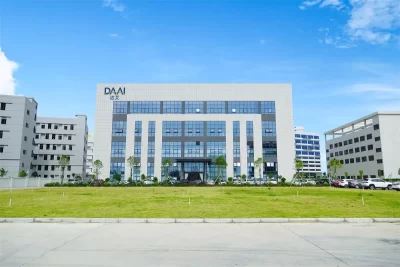
I. Why Do 90% of Brands Fall into Traps When Choosing Cosmetics Factories? Analysis of 3 Core Pain Points
According to the China Beauty Supply Chain Research Report 2024, 68% of emerging beauty brands encountered problems during their first cooperation with cosmetics factories, with 3 prominent pain points:
-
Qualification “Edge-Ball” Traps: Some cosmetics factories only hold basic business licenses but conceal issues such as expired “Cosmetics Production Licenses” or failure to pass the updated GMPC (Good Manufacturing Practices for Cosmetics) certification. Last year, an emerging skincare brand had its first batch of 50,000 bottles of essence seized by regulatory authorities because its cooperative cosmetics factory failed to complete the 2024 version of GMPC certification, resulting in direct losses exceeding 2 million yuan.
-
Opaque Production Processes: Small and medium-sized cosmetics factories often have “disconnect between verbal commitments and actual production” — for example, promising to use imported raw materials but actually mixing domestic substitutes; agreeing to inspect 30 samples per batch but only checking 5 in reality. A color cosmetics brand once found that the color payoff of eyeshadow palettes produced by its cooperative cosmetics factory was significantly different from the samples. After investigation, it was discovered that the cosmetics factory had privately replaced the color powder supplier.
-
Delayed After-Sales Response: When problems such as product allergies or packaging damage arise, small cosmetics factories often shirk responsibility and even refuse to provide production records for traceability. In 2024, a mask brand received concentrated user complaints about stinging sensations and requested raw material test reports from the cosmetics factory, but the cosmetics factory delayed the response for 2 weeks, leading to severe damage to the brand’s reputation.
The root cause is that most brands lack criteria for judging a cosmetics factory’s “core competitiveness.” They only focus on quotation levels while ignoring compliance, quality control capabilities, and service response speed.
II. 3 Core Thresholds for Compliant Production of Cosmetics Factories in 2025 (Including the Latest Regulatory Requirements)
After the National Medical Products Administration (NMPA) issued supplementary clauses to the Cosmetics Production Quality Management Specifications at the end of 2024, the compliance threshold for cosmetics factories in 2025 has been further raised. The following 3 points are “hard indicators” for selection — none can be omitted:
-
Dual Certifications + Dynamic Qualification Verification: In addition to the mandatory “Cosmetics Production License” (verify that the production scope includes your product type, such as “creams and lotions” or “aerosols”), cosmetics factories must provide the 2024 version of GMPC certification in 2025 (the 2021 old version is no longer valid). Furthermore, use the “NMPA Cosmetics Supervision APP” to check if the cosmetics factory has any administrative penalties in the past year (e.g., failure to record production accounts as required, unqualified raw material acceptance).
-
Qualified Ingredient Traceability System: Under the new regulations, cosmetics factories must establish “full-link traceability” for each batch of raw materials — for example, imported hyaluronic acid requires customs declaration forms, Chinese labels, and brand authorization certificates; domestic plant extracts require the raw material supplier’s “Safety Data Sheet (SDS) for Cosmetic Raw Materials” and third-party test reports. I once inspected a cosmetics factory in Jiangsu whose raw material traceability system allows real-time query of the raw material batch and testing time of each product. Such cosmetics factories have extremely low cooperation risks.
-
Microbial Testing Capabilities: The most common quality issue in cosmetics is microbial contamination (e.g., E. coli, Staphylococcus aureus). Compliant cosmetics factories in 2025 must have “real-time testing capabilities” — i.e., an on-site microbial laboratory that can issue test reports within 24 hours, instead of relying on external third-party institutions (which usually take 3-5 days, easily delaying production). During inspections, request to visit the laboratory and verify that equipment such as colony counters and biochemical incubators are functioning properly.

III. Insider’s Secret: “3 Checks, 2 Verifications, 1 Validation” to Quickly Identify Suitable Cosmetics Factories
This screening logic, rarely disclosed by peers, helps you quickly determine if a cosmetics factory matches your needs:
1. Check 3 Core Matching Degrees
-
Production Capacity Matching: Do not blindly pursue “large cosmetics factories.” For small and medium-sized brands with monthly orders below 10,000 units, cosmetics factories with a daily capacity of 10,000-30,000 units are more suitable (large cosmetics factories with a daily capacity of over 50,000 units often prioritize large orders, leading to longer delivery cycles for small orders). Conversely, if monthly orders exceed 50,000 units, choose cosmetics factories with a daily capacity of over 50,000 units to avoid stockouts due to insufficient capacity.
-
Formula R&D Matching: If you need customized formulas (e.g., sensitive skin-specific, preservative-free systems), check if the cosmetics factory has an independent R&D team (at least 5 members with over 3 years of formula R&D experience) and request R&D cases for similar products (e.g., developing a barrier repair cream for a sensitive skin brand). For regular products (e.g., basic moisturizing lotions), cosmetics factories with moderate R&D capabilities but strong production stability are acceptable.
-
Packaging Support Matching: If your products use special packaging (e.g., vacuum bottles, spray pumps), confirm if the cosmetics factory has corresponding filling equipment (e.g., vacuum filling lines, leak-proof spray filling equipment) to avoid high packaging damage rates due to mismatched equipment. I once encountered a brand that produced sprays using ordinary filling lines at a cosmetics factory, resulting in an 8% damage rate — professional equipment at a qualified cosmetics factory can reduce this to less than 1%.
2. Verify 2 Types of Key Information
-
Authenticity of Cooperation Cases: Cosmetics factories often claim to “have cooperated with well-known brands.” Request proof of cooperation (e.g., copies of authorized production contracts, production order records) and verify the manufacturer’s name on the brand’s product packaging via e-commerce platforms (to avoid fake cases from cosmetics factories).
-
After-Sales Response Speed: Simulate “quality problem scenarios” in advance, such as asking, “If users complain about product allergies, how soon can your cosmetics factory provide production records and raw material test reports?” Compliant cosmetics factories will commit to responding within 24 hours and providing complete data within 48 hours. Be cautious if the cosmetics factory’s answer is vague (e.g., “it depends,” “needs to go through procedures”).
3. Validate 1 Core Link
Insist that the cosmetics factory produces “samples and conducts stability tests” — not only check if the sample’s appearance, scent, and texture meet expectations but also require a 7-day stability test report from the cosmetics factory (including 45℃ high temperature, -15℃ low temperature, and room temperature cycle tests to simulate transportation and storage conditions). Last year, an essence brand failed to conduct low-temperature tests at its cooperative cosmetics factory, leading to product stratification during winter transportation and 10,000 unsellable units, resulting in heavy losses.
IV. Cost Breakdown of Cosmetics OEM/ODM: Avoid These 3 Pitfalls When Cooperating with Cosmetics Factories (Top Concern for Users)
Many brands only focus on “unit prices” when choosing cosmetics factories but ignore hidden costs. The following 3 links are key to cost control, helping you save 20%-30% of expenses when working with cosmetics factories:
-
Raw Material Procurement: Cosmetics factories often inflate prices under the guise of “imported raw materials.” In fact, some domestic raw materials (e.g., hyaluronic acid from Bloomage Biotechnology, surfactants from Shanghai Jahwa) meet international quality standards but are 30% cheaper. Request “alternative raw material options” from the cosmetics factory and select cost-effective raw materials on the premise of quality assurance (verify consistency via SDS reports provided by the cosmetics factory).
-
Production Loss: Regular cosmetics factories control production loss rates at 3%-5%. If the loss rate is not specified in the quote by the cosmetics factory, it may add additional fees later for “excessive losses.” Include a clause in the contract stating, “The production loss rate shall not exceed 5%; the cosmetics factory shall bear any excess.” I once helped a brand save 80,000 yuan in additional costs through this clause when cooperating with a cosmetics factory.
-
Custom Packaging: Cosmetics factories usually have fixed packaging suppliers. If you provide your own packaging, confirm if the cosmetics factory charges “external packaging processing fees” (some small cosmetics factories charge 1-2 yuan per unit). It is recommended to choose cosmetics factories that offer “one-stop services (raw materials + packaging + production)” to reduce communication costs and lower packaging fees through bulk purchasing with the cosmetics factory.
V. 3 Types of Featured Cosmetics Factories Worth Paying Attention to in 2025 (With Peer Cases)
With the segmentation of consumer demand, the following 3 types of featured cosmetics factories have become popular partners for emerging brands. Choose based on your brand positioning:
-
Sensitive Skin-Specific Factories: These cosmetics factories are equipped with independent “sterile production workshops” (cleanliness level of 100,000) and R&D teams specializing in gentle formulas (e.g., fragrance-free, alcohol-free, non-irritating preservatives). Case Reference: An emerging sensitive skin brand in 2024 cooperated with a sensitive skin-specific cosmetics factory in Guangzhou. With the reputation of “98% of users reporting no allergies,” its sales exceeded 5 million yuan within 6 months.
-
Green and Environmentally Friendly Factories: Aligning with the “sustainable consumption” trend, these cosmetics factories use biodegradable packaging (e.g., corn starch bottles, paper boxes) and achieve a water recycling rate of over 80% in production. Suitable for brands emphasizing “environmental protection concepts.” For example, a natural skincare brand cooperated with a green cosmetics factory in Zhejiang and increased its average order value by 20% after marking packaging as “biodegradable.”
-
Small-Batch Flexible Factories: Catering to the “trial-and-error needs” of start-up brands, these cosmetics factories accept small orders of 500-1,000 units with short production cycles (7-10 days), ideal for testing market reactions. Case Reference: A color cosmetics entrepreneur cooperated with a flexible cosmetics factory in Shenzhen to produce 1,000 lip glosses for seeding on Xiaohongshu. After confirming it as a bestseller, they placed an additional order of 10,000 units with the cosmetics factory, avoiding inventory risks from mass production.
Conclusion
Choosing the right cosmetics factory is the first step to success for beauty brands. When selecting partners in 2025, do not focus solely on quotes. Focus on the three core pillars: “compliance, matching degree, and cost transparency,” and use the “3 Checks, 2 Verifications, 1 Validation” principle for layered screening of cosmetics factories. Confirm details with the on-site inspection checklist when visiting cosmetics factories. If you encounter specific issues during the selection process (e.g., questionable qualifications of a cosmetics factory, unclear cost accounting with a cosmetics factory), refer to the criteria in this article or collect cosmetics factory information for further analysis. A high-quality cosmetics factory is not only a production partner but also a “supply chain backbone” for brand growth.
One thought on “How to Choose a Cosmetics Factory in 2025? A 10-Year Industry Insider Reveals the Core of Compliant Production + Cost Control”
Comments are closed.