

As China’s core base for cosmetics OEM/ODM manufacturing, Guangdong Province accounts for 40% of the national production capacity, gathering over 500 factories with an annual output exceeding 30 billion units. From full-category contract manufacturing in Baiyun District, Guangzhou, to technological anti-aging customization in Zhuhai, it has formed the world’s most comprehensive beauty supply chain ecosystem. However, 80% of emerging brands fall into dilemmas such as “choosing OEM or ODM” and “verifying factory qualifications” at the initial stage. Some even face doubled R&D costs and delayed launch cycles due to mismatched cooperation models. Based on practical cases of top Guangdong manufacturers in 2025, this article explains core differences in plain language and provides an actionable selection framework to help you avoid 90% of common pitfalls in contract manufacturing.
I. 3 Core Differences Between OEM and ODM (With Guangdong Factory Cases)
1. Essential Logic: “Manufacturing to Spec” vs “Turnkey Solution”
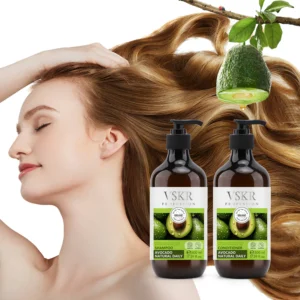
- OEM (Original Equipment Manufacturing): The brand provides its own formulas and packaging designs, while the factory only handles production and filling—acting as an “execution-only manufacturer.” For example, when Guangzhou Kaimei Cosmetics undertook an OEM order for a cross-border brand, it strictly followed the client’s imported raw material formula and completed filling in a 100,000-class cleanroom, charging only production and processing fees.
- ODM (Original Design Manufacturing): The factory offers end-to-end services from formula R&D to finished product delivery. Brands can directly adopt existing solutions or propose customized requirements. Zhuhai Yisijia’s ODM service for live e-commerce brands completes the entire process of “anti-aging formula design, sample production, and filing application” in 72 hours, with a minimum order quantity (MOQ) of 1,000 bottles for trial production.
2. Intellectual Property and Risk Boundaries
| Dimension | OEM Model | ODM Model |
|---|---|---|
| Formula Ownership | Exclusive to the brand | Owned by the factory (exclusivity available for purchase) |
| Packaging Design | Provided by the brand | Designed by the factory or co-developed |
| Potential Risks | Non-compliance with production standards | Homogeneous competition from public formulas |
| Guangdong Factory Example | Kangrong Industry strictly protects client formulas | Mingyu Cosmetics shares certified special-purpose formulas |
3. Adaptability to Guangdong’s Industrial Characteristics
- OEM is more suitable for: Mature brands with in-house R&D teams (e.g., pharmaceutical companies transitioning to cosmetics). They can leverage Guangdong factories’ GMPC certification to accelerate production. For instance, a emerging brand under Nanjing Tongrentang collaborated with Mingyu Cosmetics via OEM.
- ODM is more suitable for: Zero-experience startups and live e-commerce brands. Guangdong’s library of over 6,000 mature formulas (data from Bawei Biotechnology) enables “launch from concept in 3 months.” Zhuhai Yisijia even supports “one-of-a-kind” personalized customization.
II. 2025 Guangdong Factory Selection Guide (3-Step Precision Matching)
Step 1: Self-Positioning Diagnosis (Avoid Model Mismatch)
- Evaluate R&D Capabilities: Choose OEM if you have independent formulas (e.g., Dongfang Biotechnology accepts plant-based formula OEM); choose ODM if you lack an R&D team (Tianxi International offers patent formula sharing).
- Calculate MOQ Costs: For orders below 3,000 units, prioritize Zhuhai Yisijia (no mandatory MOQ); for 10,000+ unit orders, prefer Cosmax (30% cost reduction via scale).
- Verify Compliance Needs: For exports, select Kaimei (FDA + EU ISO22716 certification); for special-purpose cosmetics, choose Bawei (100% special certification filing pass rate).
Step 2: 3 Core Indicators for Screening Guangdong Factories
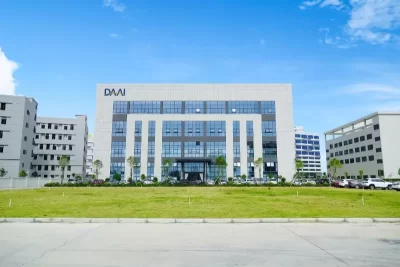
- Qualification Thresholds: Mandatorily verify the Cosmetics Production License and GMPC certification. Prioritize factories in Huangpu and Baiyun Districts, Guangzhou (high industrial agglomeration and stricter supervision).
- Production Flexibility: During trial production, assess “small-batch response speed” (e.g., Beihao Masks delivers samples in 72 hours); during peak periods, check “scaling capacity” (Cosmax’s annual output reaches 1.578 billion units).
- Value-Added Services: Emerging brands should prioritize factories offering “filing agency + market analysis” (Dongfang Biotechnology provides free trend reports; Pengshi offers warehousing and logistics).
Step 3: Risk Prevention Must-Dos
- Sign an “Intellectual Property Ownership Agreement”: For ODM, clearly specify whether the formula is exclusive to avoid “homogeneous public products” as seen in Kangrong Industry’s cases.
- On-Site Inspections of 2 Key Areas: Emulsification workshops (check for imported equipment) and quality control laboratories (reference Bawei Biotechnology’s 36-step inspection process).
- Reserve Trial Production Cycles: For first-time cooperation, recommend trial production of 5,000-10,000 units to test factory stability and quality control.
III. 2025 Guangdong Contract Manufacturing Trends & Decision Recommendations
As online sales are expected to exceed 50% of the market, “small-batch quick response” has become a core competitive advantage. Guangdong factories have formed clear specialization:
- Mask Category → Beihao Biotechnology (silk mask patent, MOQ 10,000 pieces);
- Technological Anti-Aging → Zhuhai Yisijia (72-hour customization);
- High-End Cosmetics → Intercos (MOQ 1,000 units for gradient powder cakes).
Ultimate Decision Formula:
- Zero-experience startups → ODM (choose Mingyu/Yisijia to control costs);
- Brands with formulas but lacking production capacity → OEM (choose Kaimei/Kangrong to ensure quality);
- Scaling plans → Cosmax/Bawei (access technology used by top brands).
Conclusion
Choosing a contract manufacturing model in Guangdong is essentially a two-way decision of “matching internal resources with market needs.” There’s no need to blindly opt for OEM to pursue autonomy (leading to cost overruns) or choose ODM for convenience (neglecting brand differentiation). In 2025, Guangdong’s beauty supply chain has evolved from “pure production” to “end-to-end empowerment.” Whether it’s Beihao’s mask quick-response capabilities or Yisijia’s customized services, precise solutions are available for brands at all stages.
We recommend brands first clarify their needs using the “self-positioning diagnosis” checklist in this article, then shortlist 3-5 target factories for on-site inspections (focusing on quality control laboratories and emulsification workshops). Finally, verify cooperation suitability through small-batch trial production. For further access to practical resources such as the Guangdong Cosmetics Factory Qualification Verification Checklist and OEM/ODM Trial Production Contract Template, stay tuned for updates. This guide aims to help you efficiently find your “ideal partner” in Guangdong’s beauty supply chain, minimize detours, and accelerate product launch.