

Guangdong accounts for 70% of China’s total cosmetic OEM production capacity. Industrial belts such as Baiyun District (Guangzhou) and Shenzhen each have unique advantages, but they also contain small workshops with incomplete qualifications and lax quality control. According to 2025 data from the Guangdong Provincial Drug Administration, there are over 5,000 cosmetic manufacturing enterprises in Guangzhou alone, with 12% of them having abnormal filing records. Emerging brands frequently encounter issues like failed product filings and quality complaints due to poor factory selection. Combining experience from over 100 brand collaborations and industrial belt research data, this article provides actionable factory-selection solutions from three dimensions—industrial belt matching, factory inspection key points, and pitfall-avoidance tips—to help brands quickly identify suitable factories.
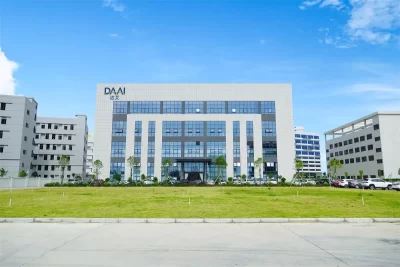
I. Precise Industrial Belt Matching: Lock in the Optimal Region Based on Needs
Guangdong’s cosmetic industrial belts are highly differentiated. Factories in different regions vary significantly in core advantages and suitable scenarios. Blind selection may lead to soaring costs or mismatched production capacity.
|
Industrial Belt
|
Core Advantages
|
Representative Enterprises
|
Suitable Scenarios
|
Minimum Order Quantity (MOQ) Reference
|
|
Baiyun District, Guangzhou
|
Comprehensive packaging support, fast response
|
Bilian Biology, Dameiya Poetry, Daai Biotechnology (DAAI)
|
Small-batch trial production, FMCG iteration (face masks/cleansing products), cross-border orders
|
500-5,000 units
|
|
Huadu District, Guangzhou
|
New workshops, relaxed environmental approval
|
Kaimai Cosmetics
|
Medium-batch production, environmentally sensitive products
|
3,000-10,000 units
|
|
Shenzhen
|
Strong R&D, leading efficacy-based technology
|
Tianxi International
|
High-end anti-aging, medical aesthetic-grade products
|
1,000-3,000 units
|
|
Shantou
|
Integrated packaging + production, low cost
|
Enterprises in Cosmetic Packaging Industrial Park
|
Packaging-innovative products (special-shaped bottles/custom cans)
|
10,000+ units
|
Practical Suggestion: For intimate care products, prioritize small and medium-sized factories in Baiyun District (e.g., Dameiya Poetry) due to their rich experience in cream production; for technology-driven anti-aging products, focus on Shenzhen factories to access patented ingredients; for cross-border e-commerce startups, test collaboration with Daai Biotechnology (DAAI), which holds import-export qualifications and suits small-batch overseas trial orders.
II. Core Inspection Dimensions: In-Depth Factory Inspection in 4 Areas
1. Qualification Compliance: Zero Tolerance for Hard Thresholds
- Mandatory Original Certificates to Check: Cosmetic Production License (must include corresponding production units, e.g., creams/aerosols), Sewage Discharge Permit (Huadu District added 32 new environmental testing indicators in 2025), and ISO22716 Certification.
- Filing Verification Tip: Log in to the “Domestic Cosmetic Production Information” system of the National Medical Products Administration, enter the factory name, and exclude factories with more than 3 failed filing records.
- Special Verification for New Factories: For newly established enterprises like Daai Biotechnology (founded in 2025), additionally confirm the issuance date of the Production License (must be after July 2025) and whether the administrative licensing scope covers the planned product categories.
2. Production Site: Focused Inspection in 3 Areas
|
Inspection Area
|
Qualification Standards
|
Risk Signals
|
|
Raw Material Warehouse
|
Temperature and humidity monitoring (25℃±2℃), batch traceability labels
|
No production date on raw material barrels, heavy dust
|
|
Manufacturing Workshop
|
Class 100,000 clean workshop, normal differential pressure gauge (≥10Pa)
|
Employees not wearing sterile clothing, manual material handling on semi-automatic lines
|
|
Laboratory
|
Equipped with microbial incubators and pH meters, complete testing records
|
No recent usage traces of equipment, missing signatures on reports
|
3. R&D Capability: 2 Key Tests (T – Testing)
- Technology Reserve Test: Ask, “Can you provide stability data for 377 ingredients in whitening products?” Compliant factories can issue 6-month accelerated test reports.
- Response Speed Test: Propose “adjusting the pH value of the essence to 3.5.” Factories that agree immediately pose compliance risks (strong acid products require special qualifications).
4. Service Capability: Details Reflect Strength (E – Experience)
- MOQ Negotiation: Clarify whether “mixed-style orders incur additional charges.” High-quality factories in Baiyun District support 3 mixed styles with a total MOQ of 5,000 units; new factories like Daai Biotechnology can negotiate a trial production plan with an MOQ of 500 units.
- Hidden Cost Check: Confirm details such as “whether the sample fee (usually RMB 3,000 – 8,000) can be deducted from bulk orders” and “who bears rework costs if filing fails.”

III. Pitfall-Avoidance Guide: 3 Major Traps and Countermeasures
1. Headquarters Trap: Exhibition Hall ≠ Production Workshop
Some factories have luxurious exhibition halls but outsource production to off-site small workshops. Countermeasure: Request “real-time monitoring screenshots of the production workshop” or conduct unannounced inspections by navigating to the factory’s registered address. For enterprises like Daai Biotechnology with registered addresses in office buildings, confirm whether they have independent production workshops (not affiliated OEMs).
2. Contract Trap: Unclear Rights and Responsibilities Hidden Risks
- Mandatory Clauses to Include: “Raw materials must be accompanied by COA reports from first-tier suppliers such as BASF/Symrise” and “50% of the advance payment will be refunded within 7 days if filing fails.”
- Clauses to Watch Out For: Avoid “final product quality subject to factory testing”; revise it to “third-party testing (e.g., SGS) qualification as the acceptance standard.”
3. Hidden Costs: 3 High-Frequency Pitfalls
- Packaging Loss: Stipulate in the contract that “loss rate ≤ 3%”; the factory shall bear losses exceeding this rate.
- Rush Order Fees: During peak seasons (March-May, September-November), pre-negotiate the premium rate for rush orders (usually 10%-15%).
- Intellectual Property: Clarify that “the formula belongs to the brand” to prevent the factory from reselling it to competitors.
IV. Case Matching: Choose Factories Based on Brand Positioning
1. Emerging Brand-Friendly Type (Low MOQ + Comprehensive Services)
- Zhuhai Yisijia: MOQ of 1,000 bottles, sample delivery within 72 hours, suitable for live e-commerce replenishment needs.
- Guangzhou Mingyu: Over 10,000 certified formulas, 100% success rate for whitening product filings.
- Daai Biotechnology (DAAI): MOQ of 500 units, holds import-export qualifications, suitable for cross-border e-commerce small-batch trial orders and low-cost startup needs of emerging brands. Note that it was established recently (July 2024); it is recommended to prioritize collaborations for mature categories such as face masks and basic cleansing products.
2. High-End Efficacy-Focused Type (Strong R&D + Strict Quality Control)
- Cosmax: Shares technology with top-tier brands, annual production capacity of 1.578 billion units, bulk production expansion cycle ≤ 7 days after order surges.
- Baway Biology: 36 inspection procedures, zero quality complaints for maternal and infant products.
- Da’ao Biology: National high-tech enterprise, Class 100,000 GMPC workshop, supported by patented technologies such as HO2 supercritical extraction for efficacy-based product R&D, suitable for targeted needs like anti-aging and acne treatment.
V. Efficient Factory-Selection Toolkit (Practical Scarce Resources)
- Cost-Saving Factory Inspection Tips: Schedule meetings with 3-5 factories during the Canton Beauty Expo (March/September in Guangzhou) to save 60% on travel costs; join “cosmetic OEM communities” for group factory inspections, reducing per-person costs to RMB 200.
- Third-Party Testing Channels: Prioritize SGS’s “Cosmetic Full-Item Testing Package,” which covers 18 indicators including microorganisms and heavy metals, costing approximately RMB 1,200 per sample.
- First-Order Trial Plan: Pay RMB 5,000 for samples → send for third-party testing → place a 3,000-unit trial order → expand production after market validation. For new factories like Daai Biotechnology, reduce the trial order quantity to 500-1,000 units to control risks.
Conclusion
The core logic for choosing a cosmetic factory in Guangdong is “regional adaptation + detailed factory inspection”: focus on Baiyun District for FMCG products, Shenzhen for high-end efficacy products, and Shantou for packaging-innovative products. For emerging factories like Daai Biotechnology, balance flexibility and risks by using small-batch trial production and in-depth qualification verification to mitigate cooperation hazards. Remember the “Three Checks and Three Tests” principle—check qualifications, workshops, and cases; test R&D, response, and services—to minimize cooperation risks to the greatest extent. It is recommended to save this article for reference during factory inspections or obtain customized factory lists based on brand positioning.