

As the “International Beauty Bay” where cosmetic manufacturers account for over 30% of the national total and the annual output steadily exceeds 100 billion yuan, Guangzhou’s cosmetic manufacturing capacity has become a core business card of China’s beauty industry. From providing OEM services for international brands such as Unilever and HBN to supporting the global expansion of domestic brands like Perfect Diary and Xiyuan, Guangzhou’s factories achieve efficient transformation “from raw materials to hit products” through full-chain advantages. Based on the 2025 Industry White Paper and government-enterprise practice cases, this article deeply dissects their manufacturing strengths to provide authoritative references for brands selecting OEM partners and investors planning industrial layout, helping grasp the core driving force behind the global expansion of “Chinese Beauty”.
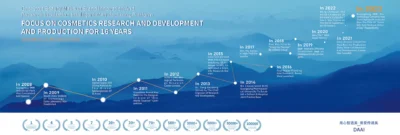
I. No.1 Industrial Cluster Density Nationwide: A 3-Hour Synergy Circle Building Efficiency Barriers
Guangzhou has formed the most intensive cosmetic industry ecosystem in China. As of October 2025, 1,857 manufacturers have gathered in characteristic parks including Baiyun Beauty Bay (Baiyun District) and Southern Beauty Valley (Huangpu District), accounting for 30% of the national total. This clustering advantage creates a unique efficiency loop:
- Instant Supply Chain Response: Baiyun District hosts over 40,000 enterprises covering brands, raw material suppliers, and packaging providers, enabling “72-hour one-stop delivery” from formula confirmation to filling and shipment. Haiya Biotechnology’s “Ruyi Ginger Shampoo” achieved 100% annual growth leveraging this timeliness ;
- Cost Intensification Effect: Raw material procurement costs are 15%-20% lower than the national average. Bawei Biotechnology established a 6,000㎡ testing center relying on cluster resources, independently completing 1,100 testing items and eliminating third-party costs ;
- Talent Siphon Effect: The reserve of industry professionals accounts for 40% of the country. Kazlan’s “Intelligent Manufacturing Factory” has a 10,000㎡ R&D center with over 200 engineers, achieving an annual lipstick production capacity of 300 million units.
II. Strong R&D Capabilities: Dual Champions in Raw Material Innovation and Patent Quantity
Guangzhou is breaking through the “raw material bottleneck” in cosmetics, building an innovation system from basic research to industrialization:
- Leading New Raw Material Filing: As of October 2025, 40 new raw materials have been filed, accounting for 12.4% of the national total. Characteristic plant-based ingredients such as Xiyuan’s “Camellia petelotii (Merr.) Sealy” and Mask Family’s “houttuynia cordata fermentation broth” have obtained national filing and been applied in hit products ;
- Abundant Patent Reserve: Invention patent applications in raw material field exceeded 11,774, ranking first nationwide. Bawei Biotechnology holds over 130 patents and led the formulation of 6 national standards, upgrading from an OEM enterprise to a “technology service provider” ;
- In-depth Industry-Academia-Research Integration: The Baiyun Beauty Bay Research Institute Cluster has admitted 11 universities and co-built laboratories with 300 enterprises. Nuode Suyuan completed 437 clinical tests from January to October, far exceeding the industry’s annual average .
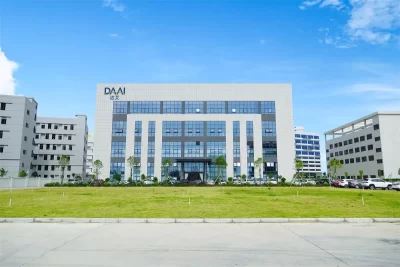
III. Intelligent Manufacturing Upgrade: New Quality Productive Forces Driving Quality Revolution
Guangzhou’s factories are accelerating the leap from “manufacturing” to “intelligent manufacturing”, with automation and green production becoming standard:
- Full-Link Digitalization: Kadilian Cosmetics Technology built a 130,000㎡ smart factory, realizing unmanned operations in production, packaging, and logistics, with productivity tripling that of traditional factories ;
- Closed-Loop Quality Control: 90% of leading enterprises have established full-life-cycle quality control systems. Bawei Biotechnology conducts 3,000 tests from raw materials to finished products, achieving a 99.8% microbial qualification rate for three consecutive years ;
- Green Production Transformation: Mask Family’s Technology Park uses 100% clean energy, with packaging recyclability rate over 85%, aligning with the global trend of sustainable consumption .
IV. Global Adaptability: The No.1 Export Hub for Overseas Expansion
Leveraging the foreign trade DNA of a millennium commercial capital, Guangzhou has become China’s top gateway for beauty products going global:
- Leading Export Scale: In 2024, the export volume of beauty and personal care products reached nearly 10 billion yuan, with Baiyun District achieving 28% export growth in the first three quarters. Xuelei Perfume radiates the Middle East and Americas through branches in Dubai and Brazil ;
- Compliance and Localization: Enterprises are proficient in international standards such as EU REACH and US FDA. Yatsen Group established an R&D center in France, while Perfect Diary ranks top in Southeast Asian search results through Google SEO optimization ;
- Comprehensive Cross-Border Services: A trading hub with 1.2 million circulating products provides one-stop services including customs declaration, filing, and logistics. Adolph secured 8.6 million orders through Southeast Asian exhibitions and Google promotion .
V. Policy and Regulatory Support: Building a High-Quality Development Ecosystem
Guangzhou drives industrial upgrading through the “support + supervision” dual-engine model:
- Targeted Policy Empowerment: The “Measures for Supporting the High-Quality Development of the Cosmetics Industry” issued in 2024 provides subsidies for new raw material R&D and brand building, with annual support up to 5 million yuan per enterprise ;
- Comprehensive Quality Infrastructure: A “nine-in-one” service system has been established. The National Cosmetics Quality Inspection Center (Guangzhou) provides full-chain support from filing to testing, helping 532 SMEs improve quality control ;
- Innovative Regulatory Assurance: The “unannounced inspection + risk early warning” mechanism has been implemented, with the sampling qualification rate in production reaching 98.7% in 2025, 2.3 percentage points higher than the national average.

Conclusion
From the efficiency advantages of industrial clusters to core breakthroughs in raw material innovation, and the synergy of intelligent manufacturing and global layout, Guangzhou’s cosmetic factories have formed “irreplicable” manufacturing competitiveness. Supported by policy guarantees and an innovation ecosystem, Guangzhou serves as both an incubator for domestic brands and a key manufacturing hub in the global beauty industry. For practitioners seeking OEM cooperation or industrial investment, grasping the three core codes of Guangzhou’s factories—”cluster synergy, strong R&D, and global adaptability”—holds the key to accessing the “beauty economy”.
3 thoughts on “Guangzhou Cosmetic Factories’ Manufacturing Advantages: The Global Leading Code Behind the 100-Billion-Yuan Annual Output | An Analysis of 5 Core Competitiveness”
Comments are closed.