

Standing on the observation corridor of a cosmetic factory in Baiyun District, Guangzhou, looking down through the glass at the fully automated production line below, robotic arms precisely grab, fill, and seal boxes. The entire workshop has only a few technical personnel monitoring the large data screens.
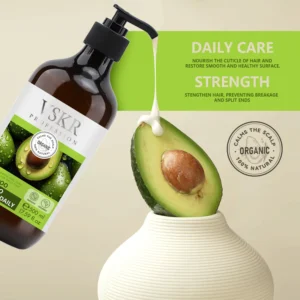
Guangzhou Cosmetic Factories are reshaping the global beauty landscape at an astonishing pace. As of October 2025, the city is home to 1,857 cosmetic production enterprises, accounting for 30% of the national total and forming an industrial cluster with an annual output value exceeding one hundred billion yuan.
From traditional OEM to independent R&D, from domestic sales to global expansion, the transformation and upgrading story of Guangzhou Cosmetic Factories is a microcosm of the high-quality development of China’s manufacturing industry.
01 Industrial Scale
The foundation of Guangzhou’s cosmetic industry is deep and broad, with a significant cluster effect. As the core hub of the national beauty industry, Guangzhou Cosmetic Factories number 1,857, representing 60% of Guangdong Province’s total and 30% of the national total.
Behind this number lies a complete industrial ecosystem, encompassing the entire chain from ingredient R&D and manufacturing to brand marketing.
Regional collaborative development is a distinctive feature. Four major beauty industry clusters, each with its own positioning and complementary advantages—”Baiyun Beauty Bay,” “Southern Beauty Valley,” “China Beauty Capital,” and “Greater Bay Area Beauty Valley”—jointly polish the golden招牌 of the “International Beauty Bay.”
This differentiated development model allows each district to focus on its areas of strength, creating synergy rather than homogeneous competition among Guangzhou Cosmetic Factories.
02 Innovation Capability
Innovation has become the core driver for the transformation and upgrading of Guangzhou Cosmetic Factories. As of October 2025, the total number of invention patent applications in Guangzhou’s cosmetic industry has reached 14,900, placing it at the forefront nationally.
Particularly in the field of cosmetic ingredients, the number of invention patent applications has exceeded 11,774, ranking first in the country.
In the cosmetic industry, “those who control the ingredients control the market.” Guangzhou has achieved significant results in new ingredient R&D, with 40 new ingredient filings in the city, accounting for 12.4% of the national total. This data indicates that Guangzhou Cosmetic Factories are leaping from simple formula application to the stage of ingredient definition.
The完善 of the innovation service system provides solid support for industrial upgrading. Guangzhou has established 31 provincial-level engineering technology research centers and built a “nine-in-one” comprehensive service system for quality infrastructure.
03 Global Expansion Practices
The globalization layout of Guangzhou Cosmetic Factories has entered a new stage. In 2024, Guangzhou’s export value of beauty and personal care products reached nearly 10 billion yuan, securing its position as the top exporting city for beauty and personal care products in China.
Behind this achievement is the increasing maturity of the “Guangzhou Model” of “brand + supply chain”协同出海.
Different types of enterprises have adopted differentiated global expansion strategies. Fei Mei Company, through precise positioning and localization strategies, has become a leader in the skincare markets of Indonesia and Malaysia; the brand Focallure has become the number one online color cosmetics brand in several Southeast Asian countries.
Brands like Perfect Diary and Colorkey have successfully entered European, American, Japanese, and Korean markets through cross-border e-commerce.
Overseas production布局 is also accelerating. Manufacturing enterprises from Guangzhou have established over 15 factories overseas, spread across countries including France, Australia, Saudi Arabia, Vietnam, and Indonesia. This globalization of production capacity enables Guangzhou Cosmetic Factories to be closer to target markets and respond quickly to demand changes.
04 Selection Criteria
Faced with numerous Guangzhou Cosmetic Factories, how should brand owners make wise choices? First, attention must be paid to compliance and safety. The list of enterprises that have submitted complete cosmetic safety assessment资料 released by the Guangdong Provincial Medical Products Administration is an important reference.
On this list, well-known enterprises such as Guangzhou Uniasia Cosmetics, BAVI Biotechnology, and Marubi Biotechnology are all included.
Second, production capacity and level of智能化 are key considerations. Taking Guangzhou Domeilai Cosmetics Co., Ltd. as an example, its 4.0 smart factory employs fully automated production. The storage tanks, pipelines, and even screws in its emulsification workshop and static rooms are made of medical-grade 316L stainless steel.
Its MES (Manufacturing Execution System) central control room can control every production step全程, achieving 100% product quality traceability.
Finally, R&D capability and innovation strength should not be overlooked. Guangzhou Cosmetic Factories are transitioning from “OEM manufacturing” to a dual-driven model of “R&D + brand.”
Choosing factories with independent R&D capabilities and rich patent reserves can bring stronger competitiveness to branded products.
05 Cultural Empowerment
As the beauty industry moves from scale expansion to high-quality development, cultural empowerment has become key for brands to achieve differentiation. Weng Zhenguo, Chairman of Guangzhou Xuelai Cosmetics Co., Ltd., points out that the core competitiveness of the current cosmetic industry has shifted towards content expression, storytelling, and emotional value delivery.
The explorations of Guangzhou Cosmetic Factories in this regard are noteworthy. Enterprises are integrating Eastern cultural elements comprehensively, from ingredient selection and formula R&D to packaging design and marketing communication, giving “Chinese makeup” both solid quality and cultural warmth.
This cultural awakening is both an inheritance of the千年商都’s commercial and cultural genes and a precise grasp of消费升级 trends.
Hu Genhua, Chairman of Uniasia Cosmetics Technology Co., Ltd., has witnessed the leap of the local beauty industry from quantitative to qualitative change. He notes that while the industry once pursued channels and capacity, today consumers have increasingly clear demands for brand power and brand culture, forcing Guangzhou Cosmetic Factories and the wider industry to transform.
06 Future Trends
The future development of Guangzhou Cosmetic Factories will present three major trends. Intelligent manufacturing and digital transformation will deepen. More and more factories will build 4.0 smart factories like Domeilai, achieving intelligent production processes through automated equipment, robotics, and big data analysis.
Industrial clusters will become more specialized. Baiyun District is全力打造 the Baiyun Beauty & Personal Care Industrial Park project, promoting the “Four Modernizations” construction of industrial parks and striving to become a benchmark for the national beauty and personal care industry.
The park has been successfully approved as one of Guangzhou’s first batch of characteristic benchmark industrial park cultivation projects, attracting a number of知名企业 headquarters.
Globalization布局 will further accelerate. Leveraging the区位优势 of being a “Cross-border E-commerce International Hub City,” Guangzhou Cosmetic Factories will more actively expand into overseas markets. Meanwhile, by participating in platform events like the Guangzhou International Beauty Week, enterprises can more effectively connect with global resources and promote brand国际化.
Walking through the central control room of Domeilai Cosmetics’ 4.0 smart factory, a huge electronic screen displays real-time data from every环节 of the production line. This智能化 factory, built with an investment of 280 million yuan, has an annual production capacity value of up to 3 billion yuan. In its filling workshop, robotic arms precisely complete each process step, with every stage from raw materials to finished products fully recorded and traceable.
This scene is being replicated across major Guangzhou Cosmetic Factories. From the “Baiyun Beauty Bay” in Baiyun District to the “Southern Beauty Valley” in Huangpu District, 1,857 cosmetic production enterprises are redefining “Made in Guangzhou” with intelligent manufacturing.
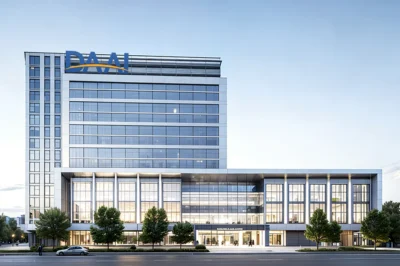
When global consumers pick up cosmetics labeled “Made in Guangzhou,” they hold in their hands the innovative heritage of a千年商都 and a vivid sample of a city’s industrial transformation, powered by its dynamic Guangzhou Cosmetic Factories.