

When you think of cosmetics manufacturing, one region consistently stands out—Guangdong, China. Home to over 3,000 beauty manufacturers representing approximately 60% of China’s cosmetics output, Guangdong has evolved from a manufacturing hub into an innovation epicenter. But what exactly makes Guangdong cosmetics factories the preferred partner for global brands ranging from indie startups to multinational corporations? This deep dive explores the unique advantages, technological capabilities, and strategic strengths that position Guangdong at the forefront of global beauty manufacturing.

The Strategic Advantages of Guangdong’s Cosmetics Ecosystem
Geographic and Infrastructure Superiority
Guangdong’s rise as a manufacturing powerhouse is no accident. Its strategic position within the Pearl River Delta—adjacent to Hong Kong and Macao—provides unparalleled logistics advantages. Major ports like Shenzhen and Guangzhou handle millions of containers annually, ensuring efficient global distribution. The province’s advanced transportation network connects manufacturers to raw material suppliers and global markets with remarkable efficiency, reducing lead times and transportation costs significantly.
Supply Chain Integration
What truly separates Guangdong from other manufacturing regions is its vertically integrated supply chain. Within a 100-kilometer radius, cosmetics factories can access:
-
Specialized raw material suppliers for innovative ingredients
-
Precision mold manufacturers for packaging
-
Glass, plastic, and aluminum container producers
-
Printing and labeling specialists
-
Testing and certification laboratories
This concentration creates a synergistic ecosystem where new product development cycles can be reduced by 30-40% compared to fragmented manufacturing locations.
Technological Innovation and R&D Capabilities
Beyond Manufacturing: The Research Revolution
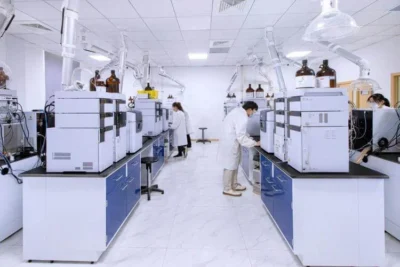
Modern Guangdong cosmetics factories have transitioned from pure contract manufacturing to integrated R&D hubs. Leading facilities invest 5-8% of their revenue back into research and development, focusing on:
-
Advanced Formulation Science: Development of waterless beauty products, stable vitamin C derivatives, and sustainable preservative systems
-
Biotechnology Integration: Utilization of fermented ingredients, probiotic extracts, and cell-culture derived actives
-
Delivery System Innovation: Multi-encapsulation technologies for targeted ingredient release and enhanced bioavailability
Smart Manufacturing Integration
Industry 4.0 technologies have transformed Guangdong’s production landscape:
-
AI-powered quality control systems using computer vision to detect microscopic imperfections
-
Blockchain-enabled supply chain tracking ensuring ingredient transparency and authenticity
-
IoT-connected production lines that self-optimize for efficiency and reduce waste by up to 25%
-
Digital twin technology allowing virtual testing of production processes before physical implementation
Sustainability: From Buzzword to Business Imperative
Green Manufacturing Practices
Forward-thinking Guangdong cosmetics factories are implementing comprehensive sustainability programs:
Energy Transformation: Many facilities now utilize rooftop solar arrays, with some manufacturers generating 30-40% of their energy needs onsite. Advanced heat recovery systems capture and repurpose thermal energy from production processes.
Water Stewardship: Closed-loop water systems have reduced consumption by up to 50% in leading factories. Membrane bioreactor technology enables wastewater treatment and recycling that meets or exceeds EU standards.
Circular Economy Initiatives: Innovative approaches include:
-
Post-consumer recycled (PCR) material integration in packaging
-
Refillable and reusable packaging systems designed for commercial viability
-
Biodegradable formulation options that maintain performance standards
-
Upcycling of production byproducts into new materials
Carbon Neutrality Commitments
Several major Guangdong manufacturers have committed to carbon neutrality timelines, with some targeting 2030—a decade ahead of the Paris Agreement schedule. These commitments are backed by substantive investments in renewable energy, carbon offset programs, and supply chain decarbonization initiatives.
Quality Standards and Global Compliance
Beyond Basic Compliance
Leading Guangdong cosmetics factories don’t just meet international standards—they often exceed them. Most reputable manufacturers maintain:
-
GMP (Good Manufacturing Practice) certification aligned with EU, US FDA, and ASEAN standards
-
ISO 22716 cosmetics-specific quality management systems
-
Cruelty-free certifications with independent verification
-
Halal, vegan, and clean beauty certifications as required by target markets
Regulatory Expertise
Navigating global cosmetics regulations requires specialized knowledge. Guangdong manufacturers typically employ dedicated regulatory affairs teams with expertise in:
-
EU Cosmetic Regulation (EC) No 1223/2009
-
US FDA requirements
-
ASEAN Cosmetic Directive
-
Middle Eastern regulatory frameworks
-
Emerging market requirements
This expertise proves invaluable for brands expanding into new markets, reducing regulatory approval times by an average of 40%.
Customization Capabilities: From OEM to OBM
Flexible Business Models
Guangdong cosmetics factories offer tailored partnerships across the spectrum:
OEM (Original Equipment Manufacturing): Full custom formulation and production based on client specifications
ODM (Original Design Manufacturing): Product concept through production with varying levels of customization
OBM (Original Brand Manufacturing): Complete brand development services including market research, branding, and distribution strategy
Small Minimum Order Quantities (MOQs)
Contrary to common perception, many Guangdong manufacturers now accommodate MOQs as low as 5,000-10,000 units for standard products, with some offering 1,000-unit MOQs for existing formulations. This flexibility has democratized access to high-quality manufacturing for indie brands and startups.
Innovation in Action: Case Studies
Success Story 1: Global Skincare Brand Expansion
A European skincare brand partnered with a Guangdong manufacturer to develop an Asia-specific line. The factory’s R&D team reformulated products for Asian skin types and climates, incorporated locally preferred ingredients like rice extract and sake, and adjusted textures to regional preferences. The result was a 300% increase in Asian market sales within 18 months.
Success Story 2: Sustainable Packaging Innovation
A US clean beauty brand collaborated with a Guangdong factory to develop fully recyclable aluminum airless pumps. The factory’s engineering team created a patented mechanism that maintained product integrity while eliminating plastic components. The packaging won three international design awards and became a key brand differentiator.
Navigating Challenges and Mitigating Risks
Intellectual Property Protection
Reputable Guangdong cosmetics factories have implemented robust IP protection measures:
-
Secure data rooms for confidential formulation sharing
-
Blockchain-based documentation of development processes
-
Physical and digital access controls in R&D facilities
-
Legal frameworks including NDAs and jurisdiction specifications in manufacturing agreements
Supply Chain Resilience
Post-pandemic, leading manufacturers have diversified raw material sourcing, increased safety stock of critical ingredients, and developed alternative formulations for supply-constrained components. Many now offer transparent supply chain mapping to brand partners.
The Future of Guangdong Cosmetics Manufacturing
Technology Convergence
The next wave of innovation will come from interdisciplinary convergence:
-
Beauty tech integration with wearable device compatibility
-
Personalized cosmetics using AI-driven formulation adjustments
-
Augmented reality for virtual product testing and customization
-
3D printing of customized packaging and even product forms
Global Partnerships Evolution
The relationship between brands and manufacturers is shifting from transactional to collaborative partnerships. Successful collaborations now involve:
-
Joint investment in proprietary technology development
-
Shared risk in new category exploration
-
Co-branded sustainability initiatives
-
Transparent cost structures and value sharing
How to Select the Right Guangdong Cosmetics Factory
Due Diligence Checklist
-
Audit compliance: Review recent third-party audit reports
-
Portfolio assessment: Evaluate experience in your specific product category
-
Client references: Speak with current clients about responsiveness and problem-solving
-
R&D capabilities: Assess laboratory facilities and technical staff qualifications
-
Sustainability verification: Request data-backed evidence of environmental claims
-
Communication assessment: Ensure English-speaking project management teams are available
-
Financial stability: Verify business longevity and financial health
Red Flags to Avoid
-
Unwillingness to provide facility tours (virtual or in-person)
-
Vague responses to technical questions
-
Pressure to bypass standard testing protocols
-
Lack of transparent pricing structures
-
Inadequate insurance coverage
Conclusion: The Guangdong Advantage in a Changing World
The dominance of Guangdong cosmetics factories in global beauty manufacturing is no temporary trend—it’s the result of decades of strategic development, continuous innovation, and adaptation to market demands. These facilities offer a unique combination of scale and flexibility, traditional expertise and cutting-edge technology, cost efficiency and quality excellence.
For brands seeking manufacturing partners, Guangdong presents compelling advantages: integrated supply chains that accelerate time-to-market, R&D capabilities that fuel innovation, sustainability practices that align with consumer values, and quality standards that meet global requirements. The province’s cosmetics manufacturers have successfully evolved from low-cost production centers to value-added partners capable of supporting brands at every stage of growth.
As the beauty industry continues to globalize while simultaneously fragmenting into niche markets, the adaptability and comprehensive capabilities of Guangdong’s cosmetics factories position them not just as manufacturers, but as strategic partners for brands looking to compete in an increasingly complex marketplace. The future of beauty manufacturing isn’t just happening in Guangdong—in many ways, it’s being defined there.
Note: This analysis is based on industry research, manufacturer interviews, and market data available through Q3 2024. Specific capabilities and minimums vary by facility. Always conduct thorough due diligence before selecting a manufacturing partner.