

If you’re in the beauty business—whether you’re a budding entrepreneur, an established brand looking to expand, or a retailer seeking private-label products—one location consistently stands out: Guangzhou, China. The phrase “Guangzhou Cosmetics Factory“ is more than just a keyword; it represents the epicenter of a massive, sophisticated, and dynamic industry. This blog delves deep into why Guangzhou has become the world’s cosmetics manufacturing hub, what you should look for in a factory, and how to navigate this complex but rewarding landscape.
1. Guangzhou: The Unrivalled Cosmetic Capital
Guangzhou isn’t just another industrial city. It’s the heart of Guangdong province, part of the Pearl River Delta Megalopolis, and the historic gateway of China’s trade. For cosmetics, its dominance is built on a powerful trifecta:
-
Complete Supply Chain Ecosystem: Within a 100-kilometer radius, you have access to everything: raw material suppliers (essential oils, pigments, bases), packaging manufacturers (bottles, caps, compacts), labeling and printing services, and logistics hubs. This drastically reduces lead times and costs, fostering incredible efficiency and flexibility.
-
Decades of Expertise and Evolution: The industry here didn’t spring up overnight. It evolved from the 1980s, starting with simpler products and gradually absorbing international technologies, standards, and trends. Factories have accumulated decades of practical know-how in formulation, production, and regulatory navigation.
-
Innovation and Adaptation: Guangzhou factories are exceptionally agile. They are plugged into global beauty trends (K-beauty glass skin, J-beauty minimalism, clean beauty, CBD-infused products) and have the R&D capability to quickly develop and produce formulas that cater to these trends.
2. Beyond Production: The Service Spectrum of a Modern Guangzhou Cosmetics Factory
Today’s leading factories are Full-Service Solution Providers. When you partner with a reputable Guangzhou cosmetics factory, you’re accessing a suite of services:
-
OEM (Original Equipment Manufacturing): You provide the formula, they handle production.
-
ODM (Original Design Manufacturing): This is where their value shines. They offer “turn-key” solutions—from market research, conceptualization, and formula development to design, production, and quality control. A brand can come with just an idea and leave with a finished, market-ready product.
-
Private Label & Contract Manufacturing: Ideal for retailers, influencers, and startups wanting their own branded line without the overhead of R&D and production facilities.
-
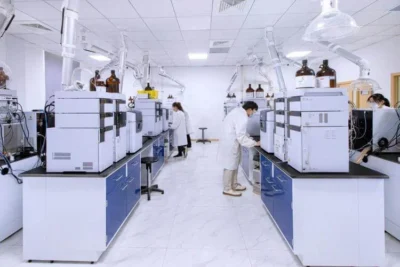
R&D and Laboratory Services: Advanced factories invest heavily in labs for stability testing, efficacy testing (like SPF verification), sensory evaluation, and developing novel formulations using cutting-edge ingredients (e.g., ceramides, probiotics, tranexamic acid).
-
Regulatory Compliance Assistance: Navigating FDA (US), EU Cosmetics Regulation, ASEAN, and other market requirements is complex. Good factories have dedicated regulatory affairs teams to help ensure your products meet the destination market’s standards.
3. The Hallmarks of a Top-Tier Guangzhou Cosmetics Factory
Not all factories are created equal. Here are the critical factors to vet:
-
Certifications are Non-Negotiable: Look for:
-
GMPC (Good Manufacturing Practice for Cosmetics) and/or ISO 22716: International standards for hygiene, quality control, and traceability.
-
ISO 9001: Quality management systems.
-
FDA Registration: If targeting the US market.
-
Environmental & Safety Certifications: Demonstrates a responsible operation.
-
-
Production Capability and Capacity:
-
Equipment: State-of-the-art, fully automated filling lines for creams, liquids, and powders; clean-room environments for sterile products; advanced laboratory equipment.
-
Minimum Order Quantity (MOQ): Can range from 3,000 to 50,000 units per SKU. A good factory will be transparent about this and may offer lower MOQs for startups on certain lines.
-
Flexibility: Ability to handle small, custom batches and scale up to massive volumes.
-
-
Quality Control (QC) Philosophy: QC shouldn’t just be a final check. It must be integrated at every stage: Incoming Raw Materials → In-Process Production → Finished Product Batch Testing → Stability Testing. Ask for their detailed QC protocol.
-
Transparency and Communication: The best partners are transparent about costs (unit price, mold fees, etc.), timelines, and challenges. They assign a dedicated project manager who communicates clearly in your language.
-
Ethical and Sustainable Practices: An increasing priority for global brands. Inquire about their sourcing policies, labor practices, waste management, and any sustainable packaging options.
4. Navigating Challenges and Mitigating Risks
Working with a Guangzhou cosmetics factory is not without its challenges. Being aware is key to success:
-
Language and Cultural Barriers: Clear, documented communication is vital. Use simple English, visuals, and confirm all details in writing. Consider using a local sourcing agent or inspector.
-
Intellectual Property (IP) Protection: This is a major concern. Ensure contracts have robust, unambiguous IP clauses stating that formulations and designs created for you are your sole property. Work with factories that have a strong reputation and respect NDAs.
-
Logistics and Shipping Complexity: Factor in shipping costs, lead times, and import/export procedures (Incoterms like FOB, EXW, DDP). A reliable factory will have experience shipping globally and can recommend freight forwarders.
-
Sample Process: Never skip this. The sampling stage (lab sample, pilot batch, pre-production sample) is crucial for perfecting the product. Expect to pay for samples and molds.
5. The Future: Where is Guangzhou Cosmetics Manufacturing Headed?
The industry is rapidly evolving to stay ahead:
-
“China-for-China” to “China-for-Global”: While still serving the massive domestic market, top factories are increasingly building brands for the world, with a deep understanding of diverse consumer preferences.
-
Tech-Infused Beauty: Incorporating biotechnology for novel ingredients, augmented reality for virtual try-ons, and AI for personalized skincare formulations.
-
Green Manufacturing: A strong shift towards eco-friendly practices: water-saving processes, renewable energy, biodegradable formulas, and refillable packaging solutions.
-
Brands as Partners: The relationship is moving from a transactional client-supplier model to a strategic, collaborative partnership where factories act as innovation extensions of the brand.
Conclusion: Your Strategic Advantage
Choosing to work with a Guangzhou Cosmetics Factory is a strategic decision that offers unparalleled advantages in speed, cost-efficiency, scalability, and innovation access. It democratizes the beauty industry, allowing visionary entrepreneurs to compete with established giants.
Your Action Plan:
-
Define Your Needs: Clearly outline your product category, target market, budget, and volume.
-
Thorough Research: Use B2B platforms (Alibaba, Global Sources), industry directories, and trade shows (the China Beauty Expo in Shanghai is a must) to shortlist 5-10 factories.
-
Due Diligence: Scrutinize certifications, request client references, and audit their facilities (virtually or in-person).
-
Start with a Sample: Invest in the sampling process to test their capability and communication.
-
Build a Relationship: Treat your factory as a long-term partner. Clear communication, mutual respect, and fair business practices lay the foundation for a successful collaboration that can grow your brand for years to come.
In the global beauty arena, Guangzhou is not just a sourcing destination; it’s a catalyst for creation. By understanding its landscape and partnering wisely, you unlock the potential to turn your beauty brand vision into a tangible, successful reality.