

In the global beauty landscape, the term Guangdong Cosmetics Factory represents more than just a manufacturing location; it signifies the heartbeat of the global beauty supply chain. From high-end European labels to viral TikTok brands, a staggering percentage of the world’s beauty products originate from this industrial powerhouse in Southern China.
For brand owners, entrepreneurs, and sourcing professionals, understanding the intricacies of the Guangdong beauty cluster is essential for scaling a successful business. This guide explores why Guangdong remains the undisputed leader in cosmetics manufacturing and how you can leverage this ecosystem for your brand.
I. Why Global Brands Converge on Guangdong Cosmetics Factories
Guangdong province, particularly cities like Guangzhou, Foshan, and Huadu, serves as a “mega-hub” that integrates research, production, and logistics into a seamless loop.
1.1 The Power of Industrial Clusters (The “Silicon Valley” of Beauty)
The concentration of beauty businesses in Guangdong—specifically the Baiyun District in Guangzhou—is unparalleled. This geographic density creates a “1-hour supply chain circle.”
-
Integrated Ecosystem: Within a small radius, you can find raw material suppliers, specialized packaging designers, mold manufacturers, and testing labs.
-
Knowledge Transfer: The proximity of thousands of factories fosters a highly skilled labor pool and a rapid exchange of manufacturing innovations.
1.2 Unmatched Speed-to-Market
In the fast-paced world of “Fast Beauty,” the ability to move from concept to shelf in weeks is a competitive necessity.
-
Rapid Prototyping: A Guangdong cosmetics factory can often produce packaging samples and formula iterations in a fraction of the time compared to North American or European counterparts.
-
Logistical Superiority: Proximity to major ports (Guangzhou, Shenzhen, Hong Kong) ensures that finished goods can be shipped globally with maximum efficiency.
II. Comprehensive Service Models: OEM, ODM, and OBM
Choosing the right partnership model is the first step in working with a Chinese manufacturer.
2.1 ODM Services: From Formula R&D to Full Branding
Most top-tier Guangdong cosmetics factories excel in ODM (Original Design Manufacturing). This is a “turnkey” solution where the factory handles everything.
-
Library of Formulas: Leading factories maintain databases of thousands of “ready-to-market” formulas—from niacinamide serums to vegan lipsticks—that are already stability-tested.
-
Market Insight: Because these factories manufacture for global brands, they often have better data on upcoming ingredient trends (such as Bakuchiol or Mushroom extracts) than the brands themselves.
2.2 Flexible Manufacturing and Low MOQ Solutions
The rise of “Indie Beauty” has pushed Guangdong factories to evolve. Many now offer Flexible Manufacturing.
-
Low MOQ (Minimum Order Quantity): While traditional factories required 10,000+ units, many modern facilities now accept orders as low as 500 to 1,000 units for “Private Label” products.
-
Scalability: These factories are built to grow with you. They can handle a 1,000-unit test launch and scale to 1 million units for a global rollout without a hitch.
III. Quality Standards and International Compliance
A common misconception is that “Made in China” implies lower quality. In the cosmetics sector, the top Guangdong factories operate some of the most advanced facilities in the world.
3.1 Global Certifications: GMPC and ISO 22716
For a Guangdong cosmetics factory to export to the US or EU, it must adhere to strict Good Manufacturing Practices (GMP).
-
ISO 22716: This is the international standard for the cosmetics industry, ensuring safety and quality at every stage.
-
GMPC (US/EU): Verification that the facility meets the stringent requirements of the FDA and European Medicines Agency.
-
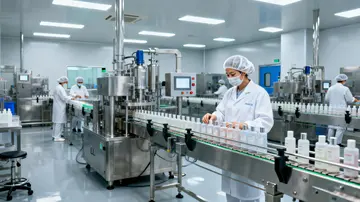
Cleanroom Standards: Top factories utilize Class 100,000 or even Class 10,000 dust-free workshops to prevent contamination.
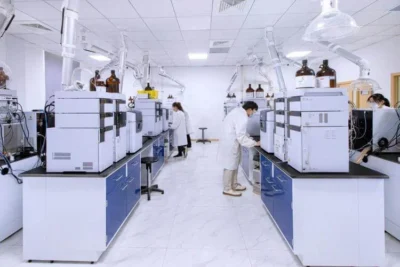
3.2 Rigorous Laboratory Testing and Stability Trials
Quality control in Guangdong is data-driven. Professional factories conduct a battery of tests before a product ever leaves the loading dock:
-
Microbiological Testing: Ensuring the preservative system effectively prevents bacteria and mold growth.
-
Heavy Metal Screening: Testing for Lead, Arsenic, and Mercury to meet global safety thresholds.
-
Stability & Compatibility: Testing how the formula reacts to temperature changes and whether it remains stable within its packaging over 24-36 months.
IV. Core Product Categories and Manufacturing Excellence
Different regions within Guangdong specialize in different niches, allowing brands to find hyper-specialized partners.
4.1 High-Performance Skincare Engineering
Guangzhou is the center for advanced skincare. Factories here focus on “functional” products.
-
Clean Beauty & Bio-fermentation: There is a massive shift toward using fermented ingredients and “clean” clinical actives.
-
Sunscreen Innovation: Guangdong factories are at the forefront of developing “invisible” SPF formulations that leave no white cast, catering to a global diverse audience.
4.2 Professional Makeup and Color Cosmetics
The Chaoshan region and parts of Dongguan are world-renowned for color cosmetics and packaging.
-
Precision Pigment Matching: Using AI-driven colorimeters to ensure every batch of foundation or eyeshadow is identical to the master sample.
-
Innovation in Textures: From “jelly-to-powder” blushes to ultra-thin liquid lipsticks, the technical capability to create unique sensorial experiences is a hallmark of the region.
V. How to Audit and Select the Right Guangdong Factory
Not all factories are created equal. A systematic vetting process is required to find a partner that aligns with your brand values.
5.1 The On-Site Inspection Checklist
If possible, a physical or third-party audit is highly recommended. Focus on:
-
R&D Investment: Does the factory have its own chemists, or do they outsource formulation? A factory with an in-house lab is always preferable.
-
Equipment Pedigree: Look for machinery from reputable brands (e.g., IKA mixers from Germany or Mizuho from Japan), which indicates a commitment to precision.
-
Staff Welfare: Ethical manufacturing is a growing concern for consumers. Check for fair working conditions and safety protocols.
5.2 Communication and Transparency
The “Soft Skills” of a factory are just as important as their machines.
-
English Proficiency: Does the export department understand the nuances of international regulations?
-
Sample Turnaround: How quickly can they iterate on a sample based on your feedback? This is a litmus test for their future responsiveness.
VI. Future Trends: Digitalization and Green Manufacturing
The Guangdong cosmetics factory of 2026 is vastly different from the factory of 2016.
6.1 Smart Factories and Industry 4.0
Digital transformation is sweeping the industry. Many factories now use MES (Manufacturing Execution Systems) that allow clients to track their production in real-time.
-
Transparency: You can see exactly what stage your order is in—from raw material weighing to final shrink-wrapping—via a digital dashboard.
6.2 The Green Transition (Sustainability)
Sustainability is no longer a “nice-to-have.”
-
Eco-Packaging: Factories are offering PCR (Post-Consumer Recycled) plastics, glass, and refillable systems.
-
Solar-Powered Production: Many new facilities in the Greater Bay Area are installing massive solar arrays to reduce their carbon footprint, helping brands meet their ESG (Environmental, Social, and Governance) goals.
VII. Conclusion: Partnering with Guangdong for Global Success
Choosing a Guangdong cosmetics factory is a strategic move that grants your brand access to the world’s most efficient and technologically advanced beauty manufacturing ecosystem. By focusing on certified partners, prioritizing R&D, and embracing the region’s move toward sustainability, you can build a product line that competes on a global stage in terms of both quality and price.
Frequently Asked Questions (FAQ)
Q1: How do I verify if a factory is legitimate? Always ask for their Business License, GMPC/ISO certificates, and recent third-party audit reports (like SGS or Intertek). You can also check their track record on platforms like Alibaba or Global Sources.
Q2: Can a Guangdong factory help with CPNP (Europe) or FDA (USA) registration? Yes. Professional export-oriented factories have regulatory departments that provide the necessary PIF (Product Information File) and COA (Certificate of Analysis) required for international registration.
Q3: What is the typical lead time for a new product? For a custom ODM project, expect 30-45 days for mass production after the sample and packaging design are approved. Private label (existing formulas) can be as fast as 15-20 days.
Would you like me to help you draft a professional Request for Quotation (RFQ) to send to these factories, or perhaps create a comparison table of the top manufacturing districts in Guangdong?