

On the global map of cosmetics manufacturing, Guangdong Cosmetics Factory has become an undeniable industry hallmark. This manufacturing cluster in Southern China not only supplies over 40% of the world’s cosmetic products but also represents the latest advancements in manufacturing technology, supply chain management, and innovative R&D within the industry. From Guangzhou’s Baiyun District to cities like Shenzhen, Dongguan, and Zhongshan, thousands of cosmetics factories constitute the world’s most complete cosmetics production ecosystem, attracting a continuous stream of brand owners from Europe, America, Japan, South Korea, and emerging markets.
With the sustained growth of the global beauty consumption market and the booming development of cross-border e-commerce, the strategic position of Guangdong Cosmetics Factory has become increasingly prominent. Whether it’s international top-tier brands seeking cost-optimized supply chain solutions or emerging brands looking for rapid product iteration and flexible production support, Guangdong’s cosmetics production bases offer an irreplaceable combination of value. This article will delve into the competitive advantages, development status, and future trends of this industrial cluster, providing a comprehensive and practical strategic guide for businesses seeking cooperation.

The Five Core Advantages of Guangdong Cosmetics Factories
Complete Industrial Chain Ecosystem
The greatest advantage of Guangdong Cosmetics Factory lies in its unparalleled industrial cluster effect. In the Pearl River Delta region, cosmetics manufacturing has formed a complete closed-loop ecosystem encompassing raw material supply, packaging material production, product R&D, filling/manufacturing, and logistics distribution. This ecosystem not only reduces production costs but also significantly shortens the time cycle from product concept to market.
The cosmetics industry cluster in Guangzhou’s Baiyun District is particularly typical, concentrating over 1,300 cosmetics production enterprises surrounded by hundreds of packaging and raw material suppliers. Such geographical agglomeration allows brand owners to coordinate the entire supply chain within a relatively concentrated area, greatly improving production efficiency. Industry data shows that this industrial cluster model can shorten the development cycle of new cosmetics products by 30-40% while reducing comprehensive manufacturing costs by approximately 20%.
Beyond geographical concentration, Guangdong Cosmetics Factory has also established a mature network of industrial collaboration. Many large factories have formed stable cooperative relationships with small and medium-sized specialized suppliers to jointly respond to market changes. For example, a factory specializing in sheet mask production might collaborate with multiple biotech companies to develop new ingredients, with design firms for packaging innovation, and with logistics companies to optimize distribution solutions. This collaborative innovation model significantly enhances the competitiveness of the entire industrial cluster.
Technological Innovation and R&D Capabilities
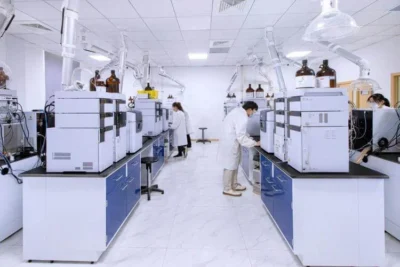
In recent years, Guangdong Cosmetics Factory has achieved a strategic transformation from “low-cost manufacturing” to “innovation-driven manufacturing.” Leading cosmetics factories invest 3-5% of their annual operating revenue into R&D, establishing research centers and quality control laboratories that meet international standards. These centers focus not only on optimizing product formulations but also on cutting-edge exploration in raw material innovation, production processes, and sustainable packaging.
The application of biotechnology in Guangdong’s cosmetics manufacturing is particularly outstanding. Many factories collaborate with universities and research institutions to develop new cosmetic ingredients based on technologies like plant stem cells, microbial fermentation, and nano-encapsulation. These innovations not only enhance product efficacy but also meet the growing global demand for “clean beauty” and “green ingredients.” For instance, some Guangdong factories have successfully developed natural antibacterial systems to replace traditional preservatives and highly effective moisturizing ingredients derived from marine bio-extracts.
In smart manufacturing, Guangdong Cosmetics Factory is introducing automated production lines, IoT technology, and AI-powered quality control systems on a large scale. These technological upgrades not only improve production efficiency and consistency but also enable full traceability of the production process. Consumers can scan a QR code on the product to learn about every step from raw material procurement to production filling. This level of transparency greatly enhances brand trust.
How to Identify Reliable Guangdong Cosmetics Factories
Certification Systems and Compliance Standards
When selecting a Guangdong Cosmetics Factory, the primary factors to consider are the factory’s certification credentials and compliance level. Internationally recognized certifications include ISO 22716 (Cosmetics Good Manufacturing Practices), ISO 9001 (Quality Management Systems), and market-specific certifications such as FDA registration and EU CPNP notification. These certifications are not only a reflection of the factory’s technical capabilities but also essential “passports” for products to enter international markets.
It is noteworthy that leading Guangdong Cosmetics Factories have begun implementing quality management systems that exceed basic compliance requirements. This includes establishing raw material traceability systems to ensure the source of every ingredient is verifiable; implementing strict environmental monitoring to control microbial contamination during production; and establishing comprehensive stability testing procedures to ensure product safety under various climatic conditions. Some factories have even obtained exclusive supplier certifications from international cosmetics retailers like Sephora and Ulta Beauty, indicating their product quality and safety standards have reached world-class levels.
Environmental and social responsibility compliance have also become important dimensions for evaluating a Guangdong Cosmetics Factory. With increasing global attention on sustainable manufacturing, many brands require suppliers to provide environmental management system certifications (e.g., ISO 14001) and social responsibility audit reports. Some forward-thinking cosmetics factories in Guangdong have made substantial investments in cleaner production, wastewater treatment, energy recovery, and packaging recycling. These investments not only reduce environmental footprint but also lower long-term operational costs.

Production Capacity and Flexibility Assessment
Different types of cosmetic brands have significantly different requirements for factory production capacity. International majors typically seek large-scale, high-stability production capabilities, while emerging brands place greater value on production flexibility and rapid response. Therefore, when evaluating a Guangdong Cosmetics Factory, it is necessary to choose the right type of partner based on your own brand positioning.
For brands seeking large-scale production, focus should be on evaluating the factory’s capacity scale, the level of automation of its production lines, and its batch-to-batch consistency control capabilities. Top-tier large cosmetics factories typically possess dozens of fully automated production lines with monthly capacities reaching millions of units and can maintain high consistency between batches. Such factories usually employ ERP and MES systems for production management, achieving end-to-end digital management from order receipt to product shipment.
For small-to-medium brands or startups, the flexibility and small-batch production capability of a Guangdong Cosmetics Factory are more critical. In recent years, “flexible manufacturing” factories specializing in serving small and medium brands have emerged in Guangdong. These factories focus on small-batch, multi-variety production models, with minimum order quantities as low as 1,000-5,000 pieces, and can support rapid product iteration. Such factories typically adopt modular production line designs, allowing quick changeovers between different product types in a short time, perfectly matching the fast trial-and-error needs of DTC and influencer brands.
Future Development Trends for Guangdong Cosmetics Factories
Sustainable Manufacturing and Green Transformation
The global cosmetics industry is undergoing a profound sustainability transformation, and Guangdong Cosmetics Factory plays a key role in this trend. Faced with increasingly stringent environmental regulations and rising consumer environmental awareness, cosmetic manufacturers in Guangdong are driving green transformation across multiple dimensions.
At the raw material level, more and more factories are adopting renewable plant-based ingredients to replace petroleum-based ones and developing water-soluble or biodegradable formulation systems. Some innovative factories have even begun using by-products from the food processing industry (like fruit peels, seeds, etc.) to extract cosmetic ingredients, achieving resource circularity. This “upcycling” model not only reduces environmental burden but also adds unique marketing narratives to products.
Packaging sustainability is another focal area of innovation for Guangdong Cosmetics Factory. Leading factories are collaborating with materials scientists to develop refillable packaging systems, bio-based plastic alternatives, and solid cosmetic formats that require no outer packaging. For example, some factories have successfully mass-produced waterless cleansing balms, solid shampoos, and dissolvable sheet masks, innovations that significantly reduce the use of plastic packaging and water resources.
Energy management and carbon reduction have also become new dimensions of competitiveness for Guangdong Cosmetics Factory. Some large factories have established solar power generation systems, achieving partial self-sufficiency in production electricity; more factories are reducing energy consumption through heat recovery, efficient lighting, and equipment upgrades. These environmental investments not only align with the ESG requirements of global brand owners but also lower the factory’s operational costs in the long term.
Deep Integration of Digitalization and Smart Manufacturing
Digital transformation is reshaping every aspect of Guangdong Cosmetics Factory. From customer engagement to production execution, from quality control to logistics distribution, the pervasive penetration of digital technology is creating a new model of manufacturing that is more efficient, transparent, and flexible.
At the customer interface, leading cosmetics factories have developed digital product customization platforms. Brand clients can select parameters such as formula base, active ingredient concentration, fragrance, and packaging style online, preview product effects in real-time, and obtain cost estimates. This “visual customization” greatly reduces the communication costs and time cycles for new product development, especially suitable for fashion beauty brands needing to respond quickly to market trends.
On the production floor, Guangdong Cosmetics Factory is widely applying IoT technology and artificial intelligence. Sensor networks monitor the operational status of production equipment in real-time, with predictive maintenance systems issuing alerts before failures occur; machine vision systems automatically inspect product fill levels, packaging integrity, and label placement, ensuring 100% quality control; AI algorithms optimize production scheduling, dynamically adjusting plans based on order priority, raw material inventory, and equipment status.
The application of blockchain technology in supply chain traceability is also becoming more widespread. Some Guangdong Cosmetics Factories have begun using blockchain platforms to record raw material origins, production batches, quality inspections, and logistics information. This immutable distributed ledger not only enhances supply chain transparency but also provides a technological solution for combating counterfeit products. Consumers can verify product authenticity and complete lifecycle information with a simple scan.
Strategic Recommendations for Partnering with Guangdong Cosmetics Factories
Establishing Long-Term Win-Win Partnerships
Successful cooperation with a Guangdong Cosmetics Factory should not be viewed as a one-time transaction but as the establishment of a long-term strategic partnership. The foundation of this relationship is mutual understanding and value alignment, not just price negotiation.
For international brands, understanding the changing landscape of China’s cosmetics regulatory environment is crucial. The National Medical Products Administration (NMPA) of China is increasingly stringent in its management of cosmetics, particularly with the new compliance requirements introduced by the “Cosmetics Supervision and Administration Regulations” implemented in 2021. Partnering with a Guangdong Cosmetics Factory familiar with these regulatory changes can significantly reduce the risks associated with product registration and market entry. Excellent factories will not only ensure production process compliance but also provide professional guidance on product registration/filing and efficacy claim support.
Intellectual property (IP) protection is one of the primary concerns for international brands when cooperating with Chinese manufacturers. When selecting a Guangdong Cosmetics Factory, special attention should be paid to the factory’s IP protection system. Leading factories establish strict information segregation systems, set up independent production areas and formula management systems for different clients, and sign stringent confidentiality agreements with employees. Some factories can even arrange “dedicated production lines” for international clients to ensure product exclusivity and confidentiality.
Establishing effective communication mechanisms is also key to successful cooperation. Misunderstandings can easily arise between international brands and Guangdong Cosmetics Factories due to language and cultural differences. It is advisable to form a multi-level communication team including technical personnel, quality management personnel, and commercial personnel, holding regular video or on-site meetings. Some brands also station long-term representatives at the factory to ensure real-time supervision of the production process and strict implementation of quality standards.
Leveraging the Collaborative Innovation Potential of Guangdong’s Industrial Cluster
The most forward-thinking brands do not merely issue production orders to Guangdong Cosmetics Factories; they fully utilize the innovation ecosystem of Guangdong’s cosmetics industrial cluster to co-develop next-generation products.
Forms of this collaborative innovation are diverse, including: cooperating with the factory’s R&D team to develop exclusive formulas; collaborating with raw material suppliers to customize new active ingredients; working with packaging design companies to create unique user experiences; and partnering with marketing agencies to test product concepts and market response. Guangdong’s complete industrial chain means all these partners can be found within a relatively concentrated geographical area, greatly enhancing innovation efficiency.
Many international brands have begun setting up R&D outposts or innovation labs in Guangdong, forming innovation alliances with local Guangdong Cosmetics Factories and research institutions. This deep cooperation not only accelerates product development but also enables brands to grasp the unique needs and preferences of Asian consumers more quickly, developing products with greater market competitiveness.
The rise of cross-border e-commerce provides new models for brand cooperation with Guangdong Cosmetics Factories. Some factories have begun offering “one-stop cross-border e-commerce solutions,” including product development, small-batch production, warehousing management, international logistics, and customs clearance services. For international brands looking to quickly enter the Chinese or Asian markets, this integrated service significantly reduces the complexity and risk of market entry.
Conclusion: Redefining the Global Value of Guangdong Cosmetics Factories
Guangdong Cosmetics Factory has transcended its traditional role as a “manufacturing contractor,” evolving into an indispensable innovation partner and supply chain solution provider within the global beauty industry. They not only serve the global market with economies of scale and cost advantages but are also redefining the value proposition of “Made in China” in the cosmetics sector through technological innovation, quality enhancement, and sustainable transformation.
For beauty brands seeking global expansion, partnering with Guangdong Cosmetics Factory is no longer a cost-driven choice but a strategically necessary move. Whether it’s testing market response rapidly through flexible manufacturing, developing differentiated products through collaborative innovation, or meeting consumer environmental expectations through sustainable production, Guangdong’s cosmetics manufacturing cluster offers a value proposition that is difficult to replicate.
Looking ahead, with the further integration of artificial intelligence, biotechnology, and circular economy principles, Guangdong Cosmetics Factory will continue to lead the transformation of global cosmetics manufacturing. Brands that can identify this trend early and establish deep cooperative relationships with excellent manufacturers will gain a competitive edge in the increasingly fierce global beauty competition.
Against the backdrop of the restructuring of the global beauty supply chain, Guangdong Cosmetics Factory is poised to transform from the “World’s Factory” into the “World’s Innovation Workshop.” This transformation will not only elevate China’s position in the global cosmetics value chain but also bring more high-quality, innovative, and sustainable beauty product choices to global consumers. For visionary brand owners, now is a critical moment to deeply understand and strategically position themselves with this vital manufacturing resource.