

When you pick up a lipstick, a serum, or a jar of face cream, what you see might be an enticing shade, luxurious packaging, or a compelling brand story. However, what truly determines a product’s efficacy, safety, and user experience is often the key player hidden behind the brand—the cosmetics manufacturer (also known as cosmetics OEM/ODM partner). They are not merely executors of production but the developers of formulas and the cornerstone of industry innovation and quality. This article delves into the core value and evolving trends of modern cosmetics manufacturers and provides guidance on how brands can select high-quality partners, revealing the hardcore capabilities behind the beauty industry.
Chapter 1: Beyond Contract Manufacturing: The Evolving Role of the Modern Cosmetics Manufacturer
Traditionally viewed simply as “factories,” leading manufacturers today have undergone a comprehensive transformation, becoming indispensable R&D and strategic partners for brands.
1.1 From Execution to Co-creation: The R&D-Driven Core of Value
Top-tier cosmetics manufacturers have established robust in-house R&D centers, bringing together scientists from fields like chemistry, biology, and dermatology. Their value extends far beyond following a provided formula:
-
Extensive Formula Libraries: They possess thousands of market-proven, mature formulas covering all categories—skincare, color cosmetics, and personal care—enabling rapid response to market trends.
-
Fundamental Research Capabilities: They focus on ingredient mechanism studies (e.g., cellular-level validation of anti-aging ingredients, skin barrier repair testing for soothing formulas), dosage form innovation (e.g., water-to-oil, bicontinuous phases, freeze-drying), and efficacy evaluation, providing scientific backing for products.
-
Customized Solutions: They conduct targeted research and development based on brand positioning (e.g., clean beauty, dermocosmetics, traditional Chinese ingredients), offering a one-stop service from concept to finished product.
1.2 The Foundation of Quality: A Stringent Internal Quality and Compliance System
Safety is the baseline;卓越 quality is the pursuit. Excellent manufacturers build quality management systems that exceed national standards.
-
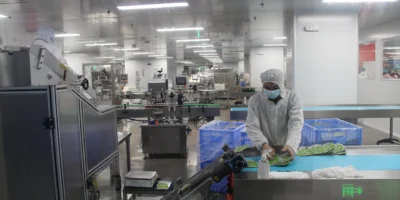
End-to-End Quality Control: This spans from raw material traceability (auditing suppliers to ensure purity and sustainability) and incoming inspection (using instruments like HPLC, GC-MS) to in-process monitoring (cleanrooms meeting 100,000-class or higher standards) and final product testing for stability, microbiology, and efficacy.
-
Navigators of Global Regulations: They are well-versed in regulations across China (e.g., Cosmetics Supervision and Administration Regulations), the EU (EC 1223/2009), the US (FDA), ASEAN, and more, ensuring compliant product launches and helping new brands navigate potential regulatory pitfalls.
-
Practitioners of Sustainability: They actively promote green manufacturing by utilizing renewable energy, optimizing processes to reduce wastewater, and adopting recyclable packaging materials, aligning with global environmental trends.
Chapter 2: Industry Insights: Four Key Trends Shaping the Future
The evolution of cosmetics manufacturers deeply reflects the future direction of the entire industry.
2.1 Tech Integration: The Deep Convergence of Beauty and Cutting-Edge Technology
-
Application of Biotechnology: Utilizing genetic engineering and microbial fermentation to obtain novel, highly active, and pure ingredients (e.g., recombinant collagen, specific-structure oligopeptides, fermentation filtrates).
-
Digitalization and Smart Manufacturing: Monitoring production data through the Internet of Things (IoT), using AI algorithms to predict formula efficacy, and even enabling flexible, small-batch, multi-variant production to meet the market’s need for rapid iteration.
-
Skin Diagnostics and Personalization: Integrating with clinical testing equipment to develop the technological foundation for products that can be fine-tuned based on individual skin conditions (e.g., hydration, sebum levels, sensitivity).
2.2 Philosophy Evolution: The Dual Advancement of “Ingredient Formulas” and “Brand Ethos”
-
The Realization of “Clean Beauty” & “Sustainability”: This goes beyond excluding controversial ingredients to encompass ethical sourcing, carbon footprint calculation, and circular packaging design—systematic projects requiring manufacturers to have corresponding ingredient databases and assessment systems.
-
Modern Interpretation of Traditional Ingredients: Applying modern technologies like supercritical CO2 extraction and nano-encapsulation to traditional botanical extracts (e.g., ganoderma lucidum, snow lotus, ginseng) to enhance their stability and transdermal absorption, backed by scientific efficacy validation.
-
Emotional Value and Sensory Experience: R&D focuses on product texture (e.g., airy feel, melting sensation), fragrance (the psychology of scent), and usage rituals, creating a multi-dimensional pleasure experience.
Chapter 3: Brand Guide: How to Select an Excellent Cosmetics Manufacturer
Choosing the right manufacturing partner is a decisive step for a brand’s success. Below is a systematic evaluation framework.
3.1 Deep-Dive Checklist for Core Competencies
-
R&D Capabilities: Visit the R&D center to understand the core team’s background, number of patents, published research, and collaboration projects with universities/hospitals. Request to review concept proposals or preliminary formula ideas tailored to your needs.
-
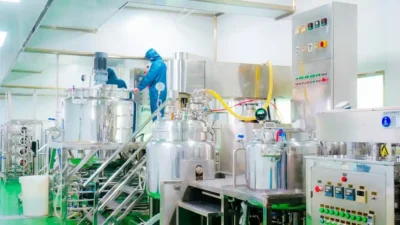
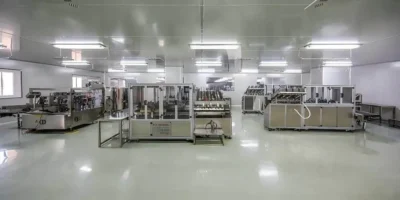
On-site Production & Quality Control Audit: A factory audit is essential. Focus on workshop cleanliness, equipment先进性 (e.g., fully automatic emulsification tanks, unmanned filling lines), and the testing instruments/standard operating procedures in the QC lab.
-
Compliance & Certifications: Verify if they hold international certifications like ISO 22716 (Cosmetics GMP), ISO 9001, and check their regulatory history for any non-compliance records.
3.2 Partnership Model and Communication Compatibility
-
Clear Service Model Positioning: Clarify whether the partnership is OEM (production according to brand-provided formula), ODM (full-service from R&D to production provided by the manufacturer), or OBM (manufacturer’s own brand). Does their core business align with your needs?
-
Responsiveness and Flexibility: Evaluate their efficiency regarding sample turnaround time, minimum order quantity (MOQ), and adaptability to order changes. Particularly for startups, check if they offer flexible support plans.
-
Past Projects & Reputation: Research case studies of representative brands they’ve served. Contact current clients if possible to understand their collaboration experience, including problem-solving abilities and long-term support.
Pitfall Avoidance Guide: Beware of Common Collaboration Traps
-
Beware of Over-Promising: Be cautious of manufacturers claiming “extremely low cost for top efficacy” or “handling everything.” Quality products require reasonable investment in cost and time.
-
Intellectual Property (IP) Protection: Clearly define the ownership of IP (formulas, processes, etc.) in contracts to secure your exclusive rights.
-
In-Depth Formula Discussion: Understand the cost structure of formulas, sources of key ingredients, and potential alternatives to avoid future situations due to cost fluctuations or ingredient shortages.
Conclusion: Collaborating to Forge the Future of Beauty
In today’s cosmetics industry, characterized by increasing specialization, refinement, and scientification, the role of the cosmetics manufacturer has moved from behind the scenes to center stage, becoming the core engine defining product strength and driving industry innovation. For brands, choosing a manufacturer is not just selecting a supplier; it is choosing a strategic partner that determines product DNA and influences brand destiny.
Whether you are an ambitious startup or an established company seeking an upgrade, a deep understanding of a manufacturer’s capabilities map and a professional approach to evaluation and磨合 are essential for creating卓越 products that truly win market and consumer trust in the competition centered on “beauty.” A successful beauty venture begins with the deepest understanding and most prudent selection of the power behind it.