

For years, the beauty industry was a gated community. If you didn’t have the capital to order 10,000 units per SKU, manufacturers wouldn’t even return your emails. But the landscape has shifted. The rise of indie beauty brands and direct-to-consumer (DTC) marketing has forced the supply chain to adapt.
Finding a cosmetics factory with low minimum order (MOQ) is no longer a myth—it is a viable strategy for startups to test the market without risking bankruptcy. However, “low MOQ” often comes with hidden trade-offs in pricing, customization, and lead times.
This guide goes beyond a simple directory. We will dissect how to find these partners, how to negotiate terms that won’t kill your margins, and how to distinguish between a genuine manufacturer and a middleman markup.
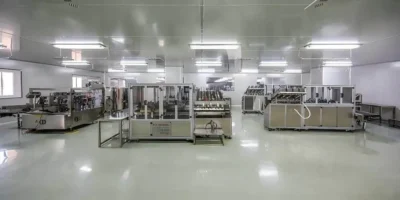
Understanding the Economics of Low MOQ Manufacturing
To negotiate effectively, you must understand why factories dislike low MOQs. It isn’t personal; it’s operational efficiency.
Why Factories Prefer High Volumes
Manufacturing lines are designed for speed. Setting up a machine to fill lipstick tubes or mix a specific serum formulation takes hours. Whether the machine runs for 500 units or 50,000 units, the setup time (and labor cost) remains roughly the same.
When you ask for a cosmetics factory with low minimum order, you are essentially asking them to disrupt their efficiency. This is why low MOQ almost always correlates with a higher price per unit. You are paying a premium for the flexibility of not holding dead stock.
Defining “Low Minimum Order” in the Industry
“Low” is subjective. In the world of professional cosmetics manufacturing, here is the realistic breakdown:
-
Standard MOQ: 10,000+ units.
-
Mid-Range MOQ: 3,000 – 5,000 units.
-
True Low MOQ: 500 – 1,000 units.
-
Micro MOQ (White Label): 50 – 100 units (Often pre-made stock with sticker labels).
Understanding where your request falls helps you target the right type of supplier.
Sourcing Strategy: Where to Find Flexible Manufacturers
Googling “cosmetics manufacturer” will mostly yield SEO-heavy middlemen. You need to dig deeper to find the actual factories willing to support small batches.
Leveraging B2B Marketplaces Beyond Alibaba
While Alibaba is the giant, it is saturated with trading companies posing as factories. To find a cosmetics factory with low minimum order, look at niche platforms:
-
Global Sources: Generally has stricter verification for manufacturers.
-
ThomasNet (North America): Excellent for finding USA-based contract manufacturers, though MOQs can be higher.
-
Beauty Sourcing Events: Online directories of trade shows like Cosmoprof often list exhibitors. Look for the “New Exhibitor” lists; these factories are often hungrier for business and more flexible on MOQ.
The “Tier 2” Geographic Strategy
Everyone looks to Guangzhou (China) or Incheon (Korea). However, competition there is fierce.
-
Southeast Asia (Thailand & Vietnam): Emerging hubs for natural and herbal cosmetics with surprisingly flexible MOQs.
-
Eastern Europe (Poland): A hidden gem for high-quality color cosmetics that comply with EU regulations, often with lower MOQs than France or Italy.
-
Domestic Micro-Labs: In the US and UK, smaller labs are popping up specifically to serve the indie market. They charge more, but shipping is cheaper and faster.
Private Label vs. Contract Manufacturing (OEM/ODM)
This is the most critical decision you will make. Your choice here dictates your MOQ requirements.
Private Label: The Lowest Barrier to Entry
If you need a cosmetics factory with low minimum order of 50 to 500 units, you are looking for Private Label.
-
How it works: You choose from a library of pre-existing formulas (e.g., a standard Vitamin C serum) and standard packaging. You simply add your logo.
-
The Trap: You do not own the formula. You cannot scale this easily if you want to move to a different factory later.
-
Best for: Influencers, salons, or testing a brand concept.
OEM/ODM: The Path to Unique Products
If you want a custom formula, the MOQ will rise.
-
OEM (Original Equipment Manufacturer): You provide the formula; they make it.
-
ODM (Original Design Manufacturer): They design the formula for you.
-
The Reality Check: Custom formulation usually requires an MOQ of at least 1,000 to 3,000 units because the factory has to buy raw ingredients in bulk. If a factory promises a custom formula for 100 units, be skeptical—they are likely tweaking a stock formula slightly.
| Feature | Private Label | Contract Manufacturing (OEM/ODM) |
| Typical MOQ | 50 – 500 units | 1,000 – 5,000+ units |
| Development Cost | Low ($0 – $500) | High ($1,000 – $5,000+) |
| Time to Market | 2 – 4 weeks | 3 – 9 months |
| Ownership | Factory owns formula | You (usually) own formula |
Vetting Your Factory: Red Flags and Green Lights
The cosmetic industry is rife with quality control issues. A low MOQ should not mean low quality.
Certifications That Actually Matter
When interviewing a potential cosmetics factory with low minimum order, ask for these documents immediately. If they hesitate, walk away.
-
ISO 22716 (GMP): Good Manufacturing Practice. This is non-negotiable for safety.
-
COA (Certificate of Analysis): Ask to see a sample COA for a previous batch. It proves they actually test their products.
-
MSDS (Material Safety Data Sheet): Crucial for shipping logistics.
The Sampling Trap
Never place a full order without a pre-production sample.
-
The “Golden Sample” Rule: The sample they send you is often made by their best technician in a lab, not on the mass production line.
-
The Fix: Ask for a “pilot run” or explicitly ask if the sample was machine-filled or hand-filled. Hand-filled samples often have better texture than mass-produced ones, leading to disappointment later.
The Hidden Costs of Low MOQ Production
Startups often calculate the “per unit” cost and forget the rest. This is how brands run out of cash.
Packaging Inventory Mismatch
This is the most common headache. You might find a factory willing to fill 500 bottles of lotion. However, the bottle manufacturer might require a minimum order of 5,000 bottles.
-
The Solution: You may have to buy 5,000 bottles, use 500, and pay the factory to store the remaining 4,500 empty bottles. Always ask about “packaging sourcing” versus “filling” MOQs separately.
Freight and Logistics Inflation
Shipping 500 units is inefficient. The cost per kilogram for air freight is significantly higher for small shipments than for pallets.
-
Strategic Tip: Sometimes, ordering 1,000 units (shipping via sea freight) is cheaper overall than ordering 500 units (shipping via air express). Do the math on “landed cost,” not just ex-factory cost.
How to Negotiate with Manufacturers as a Small Brand
Factories want long-term partners, not one-off buyers. You need to sell them on your potential.
The “Tiered Order” Strategy
Don’t just ask for a low MOQ. Present a growth plan.
-
Script: “We are launching with a soft opening of 500 units to test our marketing channels. Our forecast for Q3 is 2,000 units. Can we agree on a higher unit price for the first batch, which reverts to a standard price once we hit the 2,000 mark?”
Factories are more likely to accept a cosmetics factory with low minimum order request if they see a roadmap to higher volume.
Offering to Pay for Setup
If a factory refuses your 500-unit order, offer to pay a “setup fee” or “labor surcharge.”
Often, the refusal isn’t because they can’t do it, but because they lose money on the machine setup time. Offering an extra $200-$300 as a setup fee can often unlock the door to a premier manufacturer who otherwise wouldn’t look at you.
Conclusion: Start Small, Think Big
Finding the right cosmetics factory with low minimum order is the first hurdle in your brand’s journey. It requires patience and a willingness to compromise on unit pricing in exchange for lower risk.
Remember, the goal of the first batch is not to maximize profit margins; it is to validate your product and your market. Once you have a winning product and a loyal customer base, you will naturally graduate to higher MOQs and better margins.
Don’t let the fear of minimum orders stop you. The manufacturers are out there—you just need to approach them with the right knowledge, professional terminology, and a clear vision for growth.
Actionable Next Step
Would you like me to generate a template email script you can send to factories to inquire about low MOQs without sounding like a beginner?