

Why Custom Cosmetics Factories are Reshaping the Industry Landscape
In today’s highly competitive beauty market, “Custom Cosmetics Factories” have become a core driver for brand differentiation and market innovation. The surging consumer demand for personalized, safe, and efficacy-focused products is pushing traditional cosmetics manufacturing models towards flexibility, digitization, and precision. Custom cosmetics factories are no longer mere contract manufacturing units; they are integrated solution providers combining R&D innovation, market insights, and supply chain optimization.

Manufacturing Transformation in the Wave of Personalized Consumption
The global custom cosmetics market is growing at an annual rate of over 15%, reflecting a fundamental shift in consumer behavior. Modern consumers, especially Millennials and Gen Z, are no longer satisfied with “one-size-fits-all” standardized products. They seek cosmetics that reflect their individual skin types, preferences, values, and even lifestyles. This demand has given rise to possibilities for full-spectrum customization, from formulation and texture to color and packaging.
Custom cosmetics factories are the industrial embodiment of this trend. Through advanced data analysis, modular production systems, and rapid response mechanisms, these factories can translate individual consumer needs into tangible products while maintaining reasonable production costs and stable quality. This capability is redefining the relationship between brands and consumers, making “participatory creation” the new norm in beauty product development.
The Production Revolution Driven by Technology Convergence
The core competitiveness of modern custom cosmetics factories stems from the aggregated application of multiple technologies: AI formulation systems, 3D printing, IoT-enabled production lines, blockchain traceability systems, and other innovations are being integrated into manufacturing processes. For instance, using AI algorithms to analyze thousands of ingredient combinations and skin type data, factories can develop exclusive formulas targeting specific skin concerns in record time. Meanwhile, blockchain technology enables end-to-end transparency from raw material sourcing to finished product delivery, significantly enhancing consumer trust in custom products.
Analysis of Core Capabilities of Custom Cosmetics Factories
R&D Innovation and Formulation Customization Capability
Building Modular Formulation Systems
Leading custom cosmetics factories have developed mature modular formulation architectures. These systems break down cosmetic formulas into foundational modules, functional modules, and sensory modules, each containing multiple pre-validated, safe options. When a brand or consumer presents a custom request, R&D personnel can combine these modules like building blocks to quickly generate a prototype formula meeting specific requirements. For example, a request for a Vitamin C serum for sensitive skin could combine a “sensitive skin base emulsion module,” a “stable Vitamin C functional module,” and a “fragrance-free sensory module,” completing initial formula development within 48 hours.
This modular approach not only drastically shortens product development cycles (from the traditional 6-12 months down to 4-8 weeks) but also ensures product safety and stability by using pre-validated ingredient combinations. Furthermore, intelligent formulation systems automatically calculate compatibility between different ingredients, pH balance, and preservative efficacy, reducing human error and ensuring the reliability of custom products.
Integration of Cutting-Edge Ingredients and Technologies
Top-tier custom factories continuously invest in research on innovative ingredients and delivery technologies. From micro-encapsulated actives and liposome technology to bio-fermented ingredients and plant stem cell extracts, these factories are constantly expanding the possibilities of custom cosmetics. For instance, some factories now offer “skin microbiome customization” services, formulating skincare products with specific prebiotics or postbiotics based on a consumer’s skin microbiome test results, enabling truly precise skin health management.
Flexible Production and Supply Chain Management
Small-Batch, Multi-Variety Production Capability
Unlike traditional cosmetics factories that rely on large-scale production for cost efficiency, the core advantage of custom cosmetics factories lies in their “flexible manufacturing” capability. Through modular production line design, quick-changeover systems, and intelligent scheduling algorithms, these factories can efficiently handle production orders ranging from a few hundred to tens of thousands of units. The same production line can switch between manufacturing completely different product types in a very short time.
This capability allows emerging brands to test market response with minimal inventory risk and enables established brands to launch limited editions or region-specific product lines. For example, a custom factory might produce 5,000 bottles of a light-textured sunscreen designed for the Asian market in the morning and switch to producing 2,000 tubes of a rich night cream customized for a European client in the afternoon, without requiring complex equipment cleaning and reconfiguration.
Transparent and Traceable Supply Chain Systems
Modern consumers are increasingly concerned about the story behind products—ingredient sourcing, production conditions, and environmental footprint. Leading custom cosmetics factories achieve end-to-end traceability from raw material procurement to finished product delivery through digital supply chain management systems. By scanning a QR code on the product, consumers can see information about the origin, extraction process, quality test reports of each main ingredient, and even environmental data from the production facility.
This transparency not only meets consumer demands for information but also provides brands with powerful marketing material and a trust endorsement. Simultaneously, intelligent supply chain systems can monitor raw material inventory in real-time, predict shortage risks, and optimize procurement decisions, ensuring timely delivery of custom orders.
How to Choose an Ideal Custom Cosmetics Factory Partner
Assessing the Factory’s Technical Prowess and Compliance Standards
Certification Systems and Quality Control Capabilities
When selecting a custom cosmetics factory, the first step is reviewing its quality management system and industry certifications. Internationally recognized standards like ISO 22716 Cosmetics Good Manufacturing Practices (GMP) and ISO 9001 Quality Management Systems are basic thresholds. More advanced factories may also hold organic certifications (e.g., ECOCERT, COSMOS), halal certification, or cruelty-free certification, which determine the market scope and client types the factory can serve.
It is important to note that custom production places higher demands on quality control. Because each order may use different ingredient combinations and production processes, factories must possess robust change control procedures and risk assessment capabilities. Excellent custom factories establish independent quality files for each custom project, meticulously recording all data from ingredient inspection and production processes to finished product testing, ensuring even the smallest batch meets consistent high standards.
R&D Equipment and Technical Team Composition
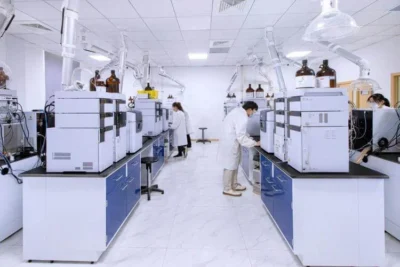
An on-site inspection of the factory’s R&D facilities and technical team is essential. A modern custom cosmetics factory should be equipped with advanced laboratory instruments such as High-Performance Liquid Chromatography (HPLC), stability test chambers, and skin simulation testers. More crucial is the professional background and experience of the technical team—they need deep expertise not only in cosmetic chemistry but also in skin biology, consumer psychology, and market trends.
Excellent custom factories often offer “co-creation workshops,” allowing brand representatives to interact directly with the R&D team to translate brand philosophy and market insights into viable product concepts. This collaborative model ensures the final product meets technical feasibility while accurately conveying brand value.
Analyzing Production Flexibility and Cost Structure
Minimum Order Quantity (MOQ) and Cost Transparency
For many emerging brands, a factory’s Minimum Order Quantity (MOQ) is often a key barrier to cooperation. While traditional cosmetics factories typically have MOQs above 10,000 units, specialized custom factories may lower this threshold to 500-1,000 units, or even offer lower trial production quantities for genuinely innovative concepts. However, a very low MOQ usually implies a higher unit cost, requiring brands to find a balance between flexibility and economy.
Transparent cost structure is equally critical. Reliable custom factories provide detailed cost breakdowns, including raw material costs, R&D fees, packaging costs, production processing fees, and quality management fees. This transparency allows brands to accurately calculate product pricing and profit margins, avoiding budget overruns due to hidden fees.
Evaluating End-to-End Service Capabilities
Leading custom cosmetics factories today provide “one-stop solutions,” covering the entire process from concept development, formula design, and packaging selection to regulatory consulting and logistics. This integrated service is particularly suitable for small and medium-sized brands with limited resources, allowing them to focus on brand building and marketing while entrusting complex production and regulatory affairs to professional partners.
When evaluating a factory’s service capabilities, special attention should be paid to its regulatory compliance support. Different markets have varying requirements for cosmetic registration, ingredient restrictions, and labeling regulations. Excellent custom factories have dedicated regulatory affairs teams to provide clients with compliance guidance for target markets and even assist in completing registration and filing processes, significantly lowering the barriers and risks for brands entering new markets.
Future Outlook: Development Trends for Custom Cosmetics Factories
Deep Integration of Digitalization and Intelligence
With the further development of Artificial Intelligence and Internet of Things technologies, future custom cosmetics factories will achieve a higher degree of automation and intelligence. The entire customization process—from skin analysis based on consumer selfies to AI-driven personalized formula generation and fully automated on-demand production systems—will become more seamless and efficient. Consumers might submit their skin data, preferences, and needs via a mobile app and receive a product fully customized for them within days, with all intermediate steps coordinated by intelligent systems.
Sustainability as a Core Value
Growing environmental awareness is driving custom cosmetics factories toward more sustainable operational models. This includes using renewable ingredients, developing waterless formulas, adopting eco-friendly packaging, optimizing energy use, and reducing carbon footprints. Forward-thinking factories are exploring “circular production” models, converting used packaging back into raw materials through take-back programs. For brands and consumers prioritizing environmental values, a factory’s sustainability capabilities will become a key consideration in selecting a partner.
Hyper-Personalization and Data-Driven Innovation
In the future, customization will move beyond the current “limited choice” model toward true hyper-personalization. Based on real-time data collected from continuous monitoring devices (like smart mirrors, skin sensors) combined with genomics, proteomics, and microbiome analyses, factories will be able to produce “dynamic formula” products that adapt to changes in a consumer’s skin condition. This deep level of personalization will not only redefine the product-consumer relationship but also give rise to entirely new business models and service types.
Conclusion
Custom cosmetics factories represent the future direction of beauty manufacturing—more flexible, intelligent, transparent, and sustainable. For brands, choosing the right custom factory partner is not merely a guarantee of product supply but a strategic choice for gaining competitive market advantage. Those factories capable of integrating advanced technology, adhering to the highest quality standards, and providing comprehensive solutions will become key enablers in the wave of innovation within the beauty industry.
In this era increasingly dominated by personalized consumption, custom cosmetics factories are no longer just production executors; they are co-creators of brand value, responders to market trends, and designers of consumer experiences. Understanding and leveraging the power of this manufacturing model will be key for beauty brands to stand out in the coming decade.