

Overview: The Global Status and Historical Evolution of Guangdong’s Cosmetics Industry
As the core region for cosmetics production in China, Guangdong Cosmetics Factory holds a pivotal position in the global beauty supply chain due to its industrial scale and innovative capabilities. Since the reform and opening-up, Guangdong Cosmetics Factory has evolved from small-scale OEM workshops into modern industrial clusters with independent R&D, smart manufacturing, and global supply chain integration capabilities. This transformation not only reflects the upgrading of Chinese manufacturing but also witnesses profound changes in the global beauty industry landscape.
Guangdong Province is home to over 3,000 licensed cosmetics manufacturers, accounting for nearly 60% of the national total, with an annual output value exceeding 200 billion RMB. This dense industrial agglomeration has formed a complete ecosystem spanning raw material supply, packaging design, product development, manufacturing, and testing certification. Areas such as Baiyun District, Huadu District in Guangzhou, Shenzhen, and Shantou have developed into distinctive cosmetics industrial parks, each forming specialized segments based on their unique resources.
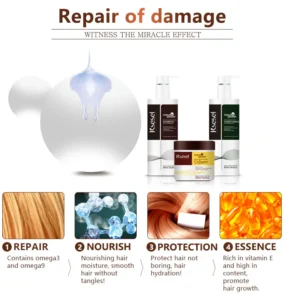
The Development History and Current Status of Guangdong’s Cosmetics Industry
In the 1980s, Guangdong Cosmetics Factory began with the “Three Supplies and One Compensation” model (supply of materials, samples, parts, and compensatory trade), primarily undertaking industrial transfers from Hong Kong and Taiwan. Production equipment was rudimentary, products mainly imitated international brands, and there was a lack of independent innovation capability. From the 1990s to the early 2000s, with the rise of the domestic consumer market, a number of local brands began to emerge. Factories started focusing on quality control and gradually built basic R&D capabilities.
Entering the second decade of the 21st century, Guangdong Cosmetics Factory entered a critical period of transformation and upgrading. Increasing environmental standards, diversified consumer demands, and the penetration of digital technologies forced factories to reform across multiple dimensions. Today, leading Guangdong Cosmetics Factory is no longer simple processing sites but industrial platforms integrating multiple functions such as R&D innovation, smart manufacturing, and brand incubation. This shift has upgraded Guangdong’s role in the global cosmetics supply chain from “manufacturing” to “smart manufacturing,” evolving from the “world’s factory” to an “innovation center.”
Industrial Agglomeration Effects and Supply Chain Advantages
The strong competitiveness of Guangdong’s cosmetics industry largely stems from its unparalleled supply chain agglomeration effect. Within a 100-kilometer radius, companies can find almost all raw materials, packaging materials, production equipment, and related services required for cosmetics production. This highly concentrated supply chain brings significant cost advantages and time efficiency—shortening the cycle from product concept to finished goods shipment by 30-50% compared to regions with dispersed supply chains.
More importantly, this geographical proximity fosters knowledge spillover and innovation synergy. Formulation engineers, packaging designers, marketing experts, and brand founders form dense professional networks, accelerating the dissemination of the latest industry trends and technologies through formal and informal exchanges. This ecosystem advantage is difficult for other regions to replicate and is a key reason why international brands choose Guangdong Cosmetics Factory as partners.
Analysis of the Core Competitiveness of Guangdong Cosmetics Factory
Technological Innovation and R&D Capabilities
The competitive advantage of modern Guangdong Cosmetics Factory has shifted from cost advantage to technology-driven. Leading factories invest 3-5% of their annual sales revenue in R&D, establishing well-equipped laboratories covering various fields such as skin science, ingredient research, formulation development, efficacy evaluation, and safety testing. These R&D centers not only serve production needs but also become sources of technological breakthroughs for the industry.
In specific niche areas, Guangdong Cosmetics Factory has developed unique technological expertise. For example, in sheet mask manufacturing, Guangdong Cosmetics Factory masters the complete technological chain from mask fabric development, essence formulation to packaging innovation. In color cosmetics, they have accumulated deep experience in powder processing, pigment stability, and long-lasting formulations. In skincare, factories focus on cutting-edge topics such as natural ingredient extraction, active ingredient stabilization, and transdermal absorption technologies.
The R&D innovation of Guangdong Cosmetics Factory shows three major trends: first, the deepening of the “green chemistry” concept, developing more environmentally friendly and sustainable production processes and ingredients; second, cross-disciplinary technology integration, applying biotechnology, nanotechnology, and microelectronics to cosmetics development; third, data-driven formulation optimization, using AI algorithms to analyze ingredient synergy and predict product performance.
Smart Manufacturing and Quality Control Systems
Global beauty market demands for product quality consistency, traceability, and rapid response have driven the smart manufacturing transformation of Guangdong Cosmetics Factory. Leading factories have deployed highly automated production lines, integrating MES (Manufacturing Execution Systems), ERP (Enterprise Resource Planning), and QMS (Quality Management Systems), achieving full-process digital management from raw material intake to finished product shipment.
Regarding quality control, Guangdong Cosmetics Factory generally establishes quality systems stricter than national standards. Beyond basic physicochemical and microbiological testing, modern laboratories are equipped with advanced instruments like High-Performance Liquid Chromatography (HPLC), Gas Chromatography-Mass Spectrometry (GC-MS), and stability test chambers, enabling comprehensive quality assessments including raw material purity analysis, heavy metal detection, and preservative efficacy challenge tests. Many factories have also established human efficacy evaluation laboratories, objectively assessing product efficacy using devices such as skin moisture testers and Visia complexion analysis systems.
This stringent quality control not only meets domestic market requirements but also lays the foundation for products to enter high-standard markets like the EU, US, and Japan. In fact, many Guangdong Cosmetics Factory have obtained international certifications such as EU GMPC, US FDA registration, and ISO 22716, qualifying them to manufacture for top global brands.
Practical Guide: How to Choose a Guangdong Cosmetics Factory for Cooperation
Assessing the Factory’s Comprehensive Capabilities and Professional Fit
Selecting a Guangdong Cosmetics Factory for cooperation is a strategic decision requiring comprehensive consideration. First, evaluate the alignment between the factory’s areas of expertise and your product needs. Different factories often specialize in specific categories—some focus on skincare, others excel in color cosmetics, while others specialize in personal care or haircare. Deeply examining the factory’s past successful cases, especially experiences with products similar to your brand positioning, is crucial for determining fit.
Production qualifications and certification systems are another key evaluation dimension. Beyond the basic Cosmetics Production License, international brands should check if the factory possesses relevant certifications for target markets, such as the capability for EU CPNP notification, US FDA registration status, etc. For products with specific claims (e.g., “organic,” “vegan,” “halal”), confirm whether the factory holds corresponding certifications (e.g., ECOCERT, COSMOS, Halal).
The factory’s R&D capabilities and technical reserves should also be significant considerations. An excellent partner can not only produce according to specifications but also provide formulation optimization suggestions, ingredient substitution solutions, and cost-control strategies. Visiting the R&D laboratory in person and having in-depth discussions with technical staff can provide an intuitive understanding of the factory’s innovation capabilities and technical depth.
Examining Supply Chain Integration and Sustainable Development Practices
Modern cosmetics competition is essentially supply chain competition. An excellent Guangdong Cosmetics Factory should possess strong supply chain integration capabilities, ensuring stable production despite raw material price fluctuations or packaging material shortages. Evaluating this requires understanding the factory’s relationships with upstream suppliers, raw material inventory strategies, and contingency plans for supply chain disruptions.
With growing global emphasis on sustainable development and corporate social responsibility, a factory’s environmental practices and ethical standards are increasingly important factors in partnership considerations. This includes wastewater treatment systems, energy efficiency, packaging material recyclability, and labor rights protection. Leading Guangdong Cosmetics Factory have begun publishing annual sustainability reports, disclosing specific measures and achievements in reducing carbon footprint and achieving a circular economy.
Cooperation models and communication efficiency are also intangible yet crucial strengths. Clarify whether the factory provides OEM (Original Equipment Manufacturing), ODM (Original Design Manufacturing), or OBM (Original Brand Manufacturing) services. Understand the project management processes, communication mechanisms, and response speed. An ideal partner should possess flexible production scheduling capabilities, adapting to small-batch, multi-variety agile production needs—particularly important for emerging brands.
Future Trends and Strategic Opportunities for Guangdong’s Cosmetics Industry
Digital Transformation and Personalized Customization
Guangdong Cosmetics Factory are undergoing profound digital transformation, reflected not only in production automation but across the entire value chain encompassing product development, consumer insights, and marketing support. By analyzing consumer preferences, skin types, and purchasing behavior through big data, factories can collaborate with brands to develop products more precisely aligned with market demands. Some forward-looking factories are even beginning to deploy AI formulation systems, using machine learning algorithms to predict the efficacy and stability of ingredient combinations, significantly shortening development cycles.
Personalized customization is another significant trend. Leveraging 3D printing, microfluidic technologies, and flexible production lines, factories can achieve small-batch or even single-unit customized cosmetics production. From personalized foundation shade matching to customized active ingredient combinations based on individual skin concerns, Guangdong Cosmetics Factory are breaking the limitations of traditional large-scale standardized production, providing brands with “mass customization” solutions. This capability is especially suitable for DTC (Direct-to-Consumer) brands and the high-end custom beauty market.
Digitization is also changing how factories collaborate with brands. Through cloud-based collaboration platforms, brand owners can view production progress, quality data, and even production line videos in real-time, enabling transparent production management. This digital connectivity makes cross-border cooperation more efficient, reducing information asymmetry and communication delays caused by geographical distance.

Green Sustainability and Response to Ethical Consumption
The global cosmetics industry faces increasing pressure for sustainable development and ethical consumption, to which Guangdong Cosmetics Factory must respond strategically. At the ingredient level, factories are developing plant extracts to replace synthetic ingredients, using renewable bio-fermented raw materials, and reducing reliance on petrochemicals. In production processes, factories are investing in water recycling systems, solar power generation, and waste recycling technologies to reduce the environmental footprint of production.
Packaging innovation is another focus of the sustainable transformation. As an important global supply base for cosmetics packaging materials, Guangdong is developing biodegradable materials, refillable systems, and simplified packaging designs. Some factories have even established packaging recycling programs, collaborating with brands to achieve closed-loop packaging cycles.
Ethical consumption trends are also pushing factories to consider the social value behind products. This includes ensuring that raw material procurement does not involve deforestation or ecological destruction, guaranteeing labor rights across all supply chain stages, and developing inclusive products suitable for different skin tones and cultures. Guangdong Cosmetics Factory that obtain certifications like Fair Trade, Vegan, or Cruelty-Free will gain a differentiated advantage in the international market.
Guangdong Cosmetics Factory stands at the forefront of transitioning from “Made in China” to “Innovated in China.” They are no longer merely synonymous with cost advantage but are comprehensive beauty solution providers integrating R&D innovation, smart manufacturing, sustainable practices, and global market insights. For international brands, deeply understanding the diverse capabilities, specializations, and development trends of Guangdong Cosmetics Factory will be key to gaining supply chain advantages in the fiercely competitive global beauty market. For Guangdong Cosmetics Factory themselves, continuous investment in technological innovation, sustainable development, and digital transformation will be the essential path to consolidating their global industry leadership. In this era of rapid evolution in the beauty industry, Guangdong Cosmetics Factory are both responders to change and shapers of future trends.