

Overview: The Global Standing of Guangdong’s Cosmetics Industry
Guangdong, as the core region for cosmetics production in China, is not only the largest domestic cosmetics production base but also an indispensable part of the global beauty supply chain. From Guangzhou’s Baiyun District to Shantou, Zhongshan, Foshan, and other areas, Guangdong Province clusters over 3,000 cosmetics manufacturing enterprises, accounting for nearly half of the total number of cosmetics manufacturers in China. The cosmetics produced by these factories not only meet domestic market demand but are also exported to more than 150 countries and regions worldwide, truly earning the title “World’s Beauty Factory.”
The formation of this industrial cluster is no accident. It stems from Guangdong‘s unique geographical advantages, policy support, a complete industrial chain, and a continuously innovative industrial ecosystem. This article will delve into the multi-dimensional value of Guangdong cosmetics factories, analyze their core competitiveness, and look ahead at future development trends for this industry.
The Scale and Influence of Guangdong’s Cosmetics Industry
According to data from China’s National Medical Products Administration (NMPA), as of the end of 2023, Guangdong Province had over 3,100 enterprises holding cosmetics production licenses, accounting for more than 45% of the national total. The combined annual output value of these enterprises exceeds 200 billion RMB, representing over 60% of the total output value of China’s cosmetics industry. From an international perspective, Guangdong’s cosmetics export value has ranked first in China for ten consecutive years, reaching 8.5 billion USD in 2023, which constitutes more than 70% of China’s total cosmetics export value.
This scale effect brings not just quantitative advantages but, more importantly, fosters a complete industrial ecosystem. From raw material supply, packaging design, product R&D, and manufacturing to marketing, the Guangdong cosmetics industry has formed a highly specialized and collaborative network. This gives Guangdong cosmetics factories a global competitive edge in cost control, production efficiency, and speed of new product development.
The Four Core Advantages of Guangdong Cosmetics Factories
Comprehensive Competitiveness from Industrial Cluster Effects
One-Stop Service from a Complete Industrial Chain
The greatest advantage of Guangdong cosmetics factories lies in their complete industrial chain supporting capabilities. In areas like Guangzhou’s Baiyun District and Huadu District, a complete industrial cluster has formed, encompassing everything from raw material supply, packaging materials, and mold development to finished product manufacturing, testing, and certification. This industrial cluster effect allows clients to find all services and resources needed for cosmetics production within a 50-kilometer radius.
A typical Guangdong cosmetics factory not only provides manufacturing services but also offers value-added services like formula development, packaging design, and regulatory consultation for its clients. This one-stop solution significantly reduces operational costs and time-to-market for brand owners, enabling new brands to complete the entire process from concept to launch within 3-6 months, whereas this process typically takes 9-12 months in other regions.
Specialized Division of Labor and Economies of Scale
Another distinct feature of Guangdong’s cosmetics industry is its highly specialized division of labor. Some factories specialize in sheet mask production, some excel in skincare product emulsion processes, while others possess unique advantages in cosmetic pressing technology. This specialization allows each factory to accumulate deep technical experience in specific areas, forming unique technical barriers.
Simultaneously, the economies of scale brought by the industrial cluster significantly lower production costs. Bulk purchasing of raw materials and packaging materials enables Guangdong cosmetics factories to secure procurement costs 15%-30% lower than smaller-scale manufacturers. These cost advantages are ultimately transformed into product competitiveness for clients. This is a key reason why many international brands choose Guangdong as their Asian manufacturing base.
Innovation, R&D Capabilities, and Technological Accumulation
Continuously Growing R&D Investment
In recent years, Guangdong cosmetics factories have significantly increased their investment in R&D and innovation. According to data from the Guangdong Cosmetics Association, in 2023, the average R&D investment of Guangdong cosmetics enterprises as a percentage of sales revenue increased from 1.5% five years ago to 3.8%, with leading enterprises even reaching 5%-8%. This growth in R&D investment has led to a marked improvement in technological innovation capabilities.
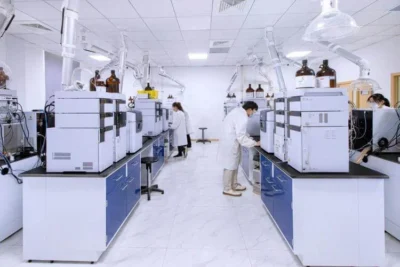
Many Guangdong cosmetics factories have established independent R&D laboratories equipped with advanced research equipment and have built industry-academia-research partnerships with numerous domestic and international universities and research institutions. They have achieved multiple breakthroughs in active ingredient research, formulation technology, and production processes, reaching internationally advanced levels, particularly in areas like botanical extract application, nano-encapsulation technology, and sustained-release technology.
Agile Product Development Capability Responding to Market Trends
Guangdong cosmetics factories are renowned for their ability to quickly respond to market trends. When a particular cosmetic ingredient or product concept gains traction in the global market, Guangdong factories can typically develop corresponding products and achieve mass production within 2-3 months. This rapid response capability stems from years of technological accumulation and acute awareness of market trends.
For example, when the “Clean Beauty” concept emerged in international markets, several Guangdong cosmetics factories swiftly adjusted their R&D focus. They developed a series of cosmetic formulations free from controversial ingredients and established corresponding raw material traceability systems. This agility allows Guangdong cosmetics factories to consistently stay at the forefront of global beauty trends.
Key Elements of Successful Guangdong Cosmetics Factories
Advanced Production Management and Quality Control Systems
Intelligent Manufacturing and Automation Upgrades
Leading Guangdong cosmetics factories are transitioning from traditional manufacturing to intelligent production. By introducing MES (Manufacturing Execution Systems), ERP (Enterprise Resource Planning) systems, and automated production lines, these factories have achieved visualization, control, and optimization of the production process. Intelligent production systems not only improve efficiency but also significantly reduce quality issues caused by human error.
For instance, a well-known Guangdong cosmetics factory invested in building a smart workshop that achieved full-process automation from batching, emulsifying, filling, to packaging. Production efficiency increased by 40% compared to traditional lines, and the first-pass yield rate rose from 95% to 99.5%. This intelligent transformation is key to maintaining the competitiveness of Guangdong cosmetics factories.
Quality Control Systems Meeting International Standards
To ensure product quality meets global market requirements, leading Guangdong cosmetics factories have generally established quality control systems compliant with international standards. Beyond adhering to China’s NMPA “Cosmetics Production Quality Management Specifications,” many factories have also obtained certifications like ISO 22716 (Cosmetics Good Manufacturing Practices), ISO 9001 (Quality Management Systems). Some factories targeting European and American markets have also obtained FDA registrations and cGMP certifications.
These factories are typically equipped with advanced testing equipment capable of conducting comprehensive quality inspections on raw materials and finished products, including microbial testing, heavy metal detection, and stability testing. Strict quality control systems ensure that cosmetics produced in Guangdong meet the regulatory requirements of different countries and regions, which is a crucial guarantee for the sustained growth of Guangdong’s cosmetics exports.

Sustainable Development and Social Responsibility Practices
Green Production and Environmental Innovation
With growing global emphasis on sustainable development, Guangdong cosmetics factories are actively promoting green production practices. Many factories optimize production processes to reduce energy consumption, replace traditional packaging with renewable materials, and develop product formulas that are easily biodegradable. Some leading enterprises have also established water recycling systems and waste classification treatment systems, significantly reducing environmental impact during production.
In terms of raw material selection, Guangdong cosmetics factories are increasingly adopting sustainably sourced ingredients, such as RSPO-certified palm oil derivatives and organically certified botanical extracts. This heightened environmental consciousness not only responds to global sustainability trends but also meets the demand of a growing number of consumers for eco-friendly products.
Social Responsibility and Ethical Sourcing
Beyond environmental protection, social responsibility has become a key focus for Guangdong cosmetics factories. Many factories have established comprehensive employee rights protection systems, provide safe and healthy working environments, and conduct regular employee training. In supply chain management, more factories are beginning to pay attention to the ethics of raw material procurement, avoiding ingredients produced using child labor or forced labor.
These social responsibility practices not only align with the requirements of international brands but also help build a responsible industry image for Guangdong cosmetics factories. With the growing popularity of ESG (Environmental, Social, Governance) investment principles, good social responsibility performance has become an important competitive advantage for attracting international clients.
A Complete Guide to Partnering with Guangdong Cosmetics Factories
How to Choose the Right Guangdong Cosmetics Factory
Evaluating the Factory’s Professional Capabilities and Qualifications
When selecting a Guangdong cosmetics factory, brands should first assess the factory’s professional capabilities and relevant qualifications. Key evaluation factors include: whether the factory holds a valid cosmetics production license; whether it has passed relevant international certifications (e.g., ISO 22716); whether it possesses professional production equipment matching the product type; the technical strength of the R&D team; and the robustness of the quality control system.
For brands with special requirements, it’s also necessary to examine the factory’s capabilities in specific areas. For example, producing organic cosmetics requires the factory to have corresponding organic certifications and segregated production conditions; producing color cosmetics requires the factory to have rich experience in color matching and pressing technology. Conducting an on-site factory audit is an effective way to assess these capabilities.
Investigating the Factory’s Track Record and Client Feedback
A factory’s past performance and client feedback are important references for assessing its reliability. Brands can request case studies from previous clients, especially those similar to their own product type. Speaking directly with the factory’s existing clients is also a good method to understand the cooperation experience.
Furthermore, brands can learn about a factory’s industry reputation through trade shows, industry reports, and professional consulting firms. In Guangdong, the annual China International Beauty Expo (Guangzhou) is an important platform to understand the capabilities of cosmetics factories. Brands can directly engage with multiple factories at the exhibition, comparing their strengths and characteristics.
Strategies and Methods for Establishing Successful Partnerships
Clear Communication and Setting Realistic Expectations
The key to establishing a successful partnership with a Guangdong cosmetics factory lies in clear, unambiguous communication and setting realistic expectations. Brands should clarify critical elements such as product specifications, quality standards, delivery timelines, and price ranges early in the cooperation and confirm them in writing. For customized products, intellectual property-related issues such as formula ownership, minimum order quantities (MOQs), and modification rights should also be clearly defined.
Considering the uncertainties inherent in cosmetics development and production, brands should maintain reasonable expectations. New product development typically requires 3-4 rounds of formula adjustments and testing, and production may encounter uncontrollable factors like raw material supply fluctuations. Maintaining open communication channels with the factory to resolve issues promptly is crucial for ensuring smooth cooperation.
Building Long-term Strategic Partnerships
The most successful brand-factory collaborations are often long-term strategic partnerships, not one-off transactions. Long-term cooperation allows the factory to gain a deeper understanding of the brand’s philosophy and product needs, enabling more precise service. Simultaneously, it allows the brand to secure more stable supply, more competitive pricing, and higher service priority.
Building a long-term partnership requires both parties to establish trust and a shared vision for growth. Brands can foster a good cooperative relationship by providing reasonable product forecasts, making timely payments, and sharing market information with the factory. Factories can maintain client relationships by continuously improving service quality, offering innovative suggestions, and flexibly responding to changes in the brand’s needs.
Future Outlook for Guangdong Cosmetics Factories
Digital Transformation and Intelligent Manufacturing
Application of Industry 4.0 in Cosmetics Production
Over the next five years, Guangdong cosmetics factories will accelerate their transition towards Industry 4.0. By connecting production equipment through IoT technology, they will achieve real-time collection and analysis of production data; utilizing AI algorithms to optimize production scheduling and energy consumption; and introducing machine vision technology to improve the accuracy and efficiency of quality inspection. The application of these digital technologies will further enhance the production efficiency and quality stability of Guangdong cosmetics factories.
Some leading Guangdong cosmetics factories have already begun experimenting with “digital twin” technology—creating digital models of production lines in a virtual environment, optimizing production parameters through simulation, and then applying them to actual production. This technology can significantly reduce the commissioning time and cost for new production lines and increase the success rate of new product launches.
Customization and Small-Batch Production
With increasing consumer demand for personalized products, Guangdong cosmetics factories are developing flexible production capabilities to support small-batch, multi-variety production models. Through modular production line design and quick mold changeover technology, factories can switch between producing different products without stopping the line, making small-batch production economically viable.
Some innovative factories are even exploring “on-demand production” models, adjusting production plans based on real-time sales data to reduce inventory backlog and the risk of unsold products. This production model requires highly digitalized supply chain management and production control systems, representing the future direction of cosmetics manufacturing.
Global Layout and Localized Services
Expansion into Overseas Production Bases
Amid changing international trade environments and diverse global market demands, some well-resourced Guangdong cosmetics factories are considering establishing production bases overseas. Southeast Asia, the Middle East, and Eastern Europe have become popular choices for Guangdong factories’ overseas expansion, offering relatively lower production costs and easier access to regional markets.
Establishing overseas production bases can not only help Guangdong cosmetics factories circumvent trade barriers but also better serve local markets. Through localized production, factories can respond more quickly to changes in market demand, reduce logistics time and costs, and provide products that better align with local consumer preferences and regulatory requirements.
Establishment of Global R&D Networks
Beyond production globalization, Guangdong cosmetics factories are also building global R&D networks. By setting up R&D centers or partnering with local research institutions in countries with advanced beauty R&D, such as South Korea, Japan, and France, Guangdong factories can absorb the latest global beauty technologies and trends, enhancing their own innovation capabilities.
The establishment of this global R&D network enables Guangdong cosmetics factories to better serve international brands, providing innovative products that meet the needs of different markets. Simultaneously, the integration of global R&D resources helps Guangdong factories develop high-end products with independent intellectual property rights, elevating their position in the global value chain.

Conclusion
Guangdong cosmetics factories, as a core force in the global beauty supply chain, are at a critical juncture of transformation and upgrading. Facing increasingly fierce global competition and constantly evolving market demands, Guangdong cosmetics factories must continuously innovate, enhance their technological prowess, strengthen quality management, embrace digital transformation, and actively fulfill social responsibilities.
For brand owners, partnering with Guangdong cosmetics factories offers access to advanced production capabilities, rapid response to market trends, and cost advantages. By establishing strategic partnerships, brands and factories can grow together, developing more competitive products to meet the growing global consumer demand for beauty products.
Looking ahead, with technological advancements and market evolution, Guangdong cosmetics factories will continue to play a vital role in the global beauty industry, not only as production bases but also as innovation centers and leaders in sustainable development practices. This transformation will bring new vitality and possibilities to the global beauty industry, further solidifying Guangdong’s position as the “World’s Beauty Factory.”