

Part 1: Why Do Global Beauty Brands Choose Guangzhou Cosmetics Factories?
As the heartland of China’s cosmetics industry, Guangzhou is home to more than half of the country’s cosmetic manufacturers, accounting for nearly 70% of the national market’s annual output value. The cosmetics factories in this city are not merely production bases; they represent a strategic hub for global beauty industry innovation, R&D, and supply chain integration.
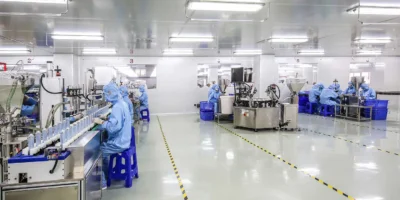
The Unique Advantages of Guangzhou’s Cosmetics Industry Cluster
The competitive edge of Guangzhou’s cosmetics factories lies first in its complete industrial chain. From raw material supply, packaging design, and R&D production to logistics and distribution, Guangzhou has developed the world’s most efficient ecosystem for the cosmetics industry. The three major industrial parks in Baiyun, Huadu, and Conghua districts have gathered over 3,000 cosmetics and related enterprises. This dense industrial cluster creates unparalleled synergistic effects.
More crucially, Guangzhou’s cosmetics factories have accumulated decades of professional experience and technical expertise. Many have been serving international brands for over 20 years, possessing a profound understanding of the regulatory standards, consumer preferences, and product trends in diverse markets like Europe, America, Japan, South Korea, and Southeast Asia. This experience translates into higher compliance, faster market response, and more precise product positioning capabilities in actual production.
The Real Manifestation of Technological Innovation and R&D Strength
Modern Guangzhou cosmetics factories have completely shed the stereotype of “low-end processing.” Leading factory groups invest 5-8% of their annual sales in R&D, establishing laboratories that meet international standards and equipping them with advanced instruments like High-Performance Liquid Chromatographs (HPLC), mass spectrometers, and skin testing equipment. Many factories have established industry-academia-research partnerships with universities like Sun Yat-sen University and South China University of Technology to co-develop new ingredients, formulation technologies, and testing methods.
Particularly in cutting-edge fields such as natural ingredient extraction, microcapsule encapsulation technology, and skin penetration enhancement, Guangzhou factories have made breakthrough progress. For instance, proprietary technologies like “plant stem cell extraction” and “low-temperature high-pressure nano-emulsification processes” developed by some factories have increased the retention rate of active ingredients in products by over 40%, reaching internationally leading levels.
Part 2: Specializations and Core Competencies of Guangzhou Cosmetics Factories
Deep Expertise in Skincare R&D and Production
Guangzhou skincare factories possess profound technical reserves in formulation science. They have established complete technical systems across specialized areas from basic moisturizing to anti-aging, whitening/spot removal, and sensitive skin repair. Especially in the applied research of Chinese characteristic botanical ingredients like ganoderma lucidum, ginseng, and centella asiatica, Guangzhou factories have built unique technological advantages.
Modern production environment control is another key strength. Top-tier factories operate cleanrooms meeting 100,000-class or even 10,000-class standards, with air cleanliness, temperature, humidity, and microbial control strictly complying with international GMPC and ISO 22716 norms. The widespread adoption of fully automated filling lines, intelligent weighing systems, and online quality inspection equipment ensures high batch-to-batch consistency and stability.
Manufacturing Innovations in Color Cosmetics and Personal Care
Guangzhou color cosmetics factories have developed unique competitiveness in color science, powder processing, and emulsification technology. Deep collaborations with international color trend institutions like Pantone enable these factories to synchronize with or even predict global color trends. Their R&D capabilities in texture innovations—such as matte, velvet, and metallic finishes—have gained recognition from numerous international brands.
In the personal care product sector, Guangzhou factories are leading the “green chemistry” transformation. Innovative products like silicone-free shampoos, amino acid-based surfactants, and probiotic hair care are continuously emerging. Eco-friendly packaging solutions have also become a new highlight, including recyclable materials, refillable designs, and plastic-reduced packaging, meeting global market demands for sustainability.

Part 3: A Complete Process Analysis of Partnering with a Guangzhou Cosmetics Factory
A Transparent Cooperation Process from Concept to Finished Product
Collaboration with a Guangzhou cosmetics factory begins with an in-depth needs analysis phase. Professional factories first seek to understand the brand positioning, target audience, market channels, and price points before providing matched solutions. This stage includes competitor analysis, cost structure optimization, and market trend alignment to ensure product concepts are both competitive and production-feasible.
The R&D and sampling phase represents the core value of modern cosmetics manufacturing. Excellent factories not only provide base formulas but also offer customized adjustments based on brand requirements. This process involves raw material screening, formula design, stability testing, safety assessment, and efficacy verification, typically requiring 3-5 rounds of iterative optimization until fully meeting brand expectations.
The quality control system during mass production is the true test of a factory’s capability. Leading factories implement a full-process quality traceability system, from incoming raw material inspection and in-process monitoring to finished product release. Each batch comes with complete production records and test reports, compliant with the regulatory requirements of major global markets like China’s NMPA, the US FDA, and the EU’s CPNP.
Innovative Models for Small-Batch Customization and Flexible Production
Catering to emerging brands and startups, Guangzhou factories have developed flexible, small-batch production solutions. Minimum Order Quantities (MOQs) can be as low as 1,000-3,000 pieces, significantly lowering the market entry barrier for brands. Modular production line designs allow rapid switching between different products on the same equipment, greatly enhancing responsiveness to market changes.
More valuable are the “brand incubation services” offered by some factories—providing not just manufacturing but also assisting with market positioning, packaging design, marketing strategy, and even channel development. This comprehensive support enables many international emerging brands to enter Asian and global markets with lower cost and risk.
Part 4: How to Identify and Select a High-Quality Guangzhou Cosmetics Factory?
Key Assessment Points for Certifications and Compliance Capabilities
When selecting a cosmetics factory, the primary focus should be on its compliance credentials. A quality factory should possess at least a Cosmetics Production License, ISO 22716/GMPC Quality Management System certification. Export-oriented enterprises should also have international registrations like FDA and CPNP notifications. However, these are just the baseline; the real differentiation lies in daily implementation details.
In-depth evaluation should include: observing the transparency and traceability of the factory’s raw material supply chain back to source suppliers; checking if the in-house lab testing capabilities cover key indicators like physicochemical properties, microbiology, heavy metals, and hormones; understanding the robustness of the adverse reaction monitoring system and product recall mechanism. These deeper-level quality management systems are the fundamental guarantee of product safety and stability.
Practical Evaluation of R&D Innovation and Market Responsiveness
The core value of a quality cosmetics factory lies in its R&D and innovation capabilities. During a visit, focus on: the professional background and experience of the R&D team; the level of laboratory equipment; cooperative projects with scientific research institutions; patent applications and new product development records. It’s particularly important to understand if the factory possesses forward-looking technology reserves and can anticipate and lead market trends.
Market response speed is crucial in modern commercial competition. When evaluating a factory, understand: whether its new product development cycle can be controlled within 90-120 days; the flexibility and speed of formula adjustments; the feasibility and cost control for small-batch production; production capacity elasticity to meet sudden market demands. These capabilities determine a brand’s competitiveness in a fast-changing market.
Part 5: Future Trends and Strategic Choices for Guangzhou Cosmetics Factories
Dual Transformation: Intelligentization and Sustainable Development
Over the next five years, Guangzhou cosmetics factories will accelerate their transformation toward intelligentization and digitalization. Technologies like Industry 4.0 production lines, AI-powered quality control, and blockchain traceability systems will become widespread. This transformation not only improves efficiency and consistency but, more importantly, enables a shift from “large-scale standardized production” to “large-scale personalized customization,” meeting consumers’ growing demand for personalization.
Sustainable development has become an irreversible industry trend. Leading factories are advancing green transformation across multiple dimensions: developing environmentally friendly formulas to reduce water pollution; adopting renewable energy to lower carbon footprints; designing circular packaging to reduce plastic use; establishing zero-waste production systems to improve resource utilization. These initiatives not only align with global regulatory trends but also become significant marketing assets for brands.
Coordinated Strategy: Global Layout and Localized Services
As competition intensifies in the global beauty market, Guangzhou cosmetics factories are implementing a dual strategy of “global layout + localized services.” On one hand, they are establishing branch plants or cooperative bases in regions like Southeast Asia and Europe to circumvent trade barriers and be closer to regional markets. On the other hand, they are deepening their understanding of target markets’ cultural preferences, aesthetic trends, and consumption habits to provide truly localized product solutions.
For brands, this means the opportunity to establish deeper and more diverse partnerships with Guangzhou factories. Whether exploring emerging markets or penetrating mature ones, brands can receive flexible and professional supply chain support. This global capability transforms Guangzhou cosmetics factories from a synonym for “Made in China” into “Global Beauty Solution Providers.”
Conclusion
Guangzhou cosmetics factories have completed their metamorphosis from “the world’s factory” to a “global beauty innovation center.” Here, traditional manufacturing wisdom seamlessly integrates with modern technology, economies of scale coexist with flexible innovation, and cost advantages balance with quality pursuit. Whether you are a startup seeking market breakthroughs or an established enterprise optimizing your global supply chain, Guangzhou cosmetics factories can provide value-added solutions that exceed expectations.
Are you looking for a cosmetics partner that understands your brand vision and possesses both R&D depth and production precision? The professional teams at Guangzhou’s top cosmetics factories are ready to transform your product concept into market success. Contact us today to obtain a customized cosmetics manufacturing solution.