

When we use a jar of face cream or a tube of lipstick, few consider the story behind its creation. The cosmetic factory, a critical yet often hidden link in the consumer chain, is actually a convergence point of technology, aesthetics, and artisanal spirit. Modern cosmetic factories have long evolved beyond the concept of traditional production workshops, transforming into complex ecosystems that integrate cutting-edge technology, stringent quality control, and sustainable principles.
1. The Technological Core of a Cosmetic Factory: Beyond Mixing and Filling
1.1 The Precision Dance of Intelligent Production Lines
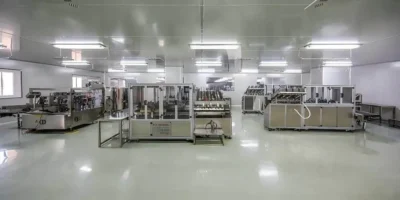
Leading contemporary cosmetic factories have undergone comprehensive automation and digital transformation. From raw material dispensing, emulsification, and mixing to filling and packaging, the entire process is precisely directed by a central control system. Smart sensors monitor key parameters like temperature, pH, and viscosity in real-time, ensuring batch-to-bisbatch consistency exceeds 99.9%. A single modern production line can process thousands of units per hour while maintaining laboratory-grade precision.
Of particular note is modular production line design. This flexible configuration allows a factory to quickly switch between different product types on the same line—from water-based serums to oil-based creams—reducing changeover time from several hours to under 30 minutes. This flexible production capability is the core competitive edge in responding to rapidly changing market demands.
1.2 The R&D Laboratory: The True Birthplace of Innovation
The core competitiveness of a cosmetic factory often lies hidden within its laboratories. Advanced analytical instruments such as High-Performance Liquid Chromatography (HPLC), mass spectrometers, and 3D skin model testing systems form the scientific foundation of product development. The introduction of microfluidic technology has elevated the delivery efficiency of active ingredients to new heights, while bio-fermentation technology enhances the stability and potency of traditional botanical extracts.
Factory laboratories keep pace with the forefront of skin science research. They conduct not only routine stability tests but also evaluate product safety using in vitro reconstructed epidermis models, significantly reducing animal testing while obtaining data more relevant to human skin. This deep R&D capability elevates quality factories from mere “contract manufacturers” to genuine technological partners for brands.
2. Deconstructing the Journey from Raw Material to Finished Product
2.1 The Transparency Revolution in the Raw Material Supply Chain
Modern cosmetic factories impose near-rigorous requirements for raw material traceability. Blockchain technology is beginning to be applied in the traceability of premium ingredients. Data from every step—from the pH level of the soil where roses in Grasse, France are grown, to the water temperature of the extraction zone for Japanese deep-sea collagen—is recorded on an immutable distributed ledger.
Factories establish raw material molecular fingerprint databases, performing spectral analysis on each incoming batch and comparing it against standard profiles to ensure the content and purity of active ingredients. This molecular-level quality control reduces the possibility of adulteration to virtually zero. Simultaneously, green chemistry principles guide raw material selection, prioritizing sustainable ingredients that are biodegradable and have a low carbon footprint.

2.2 The “Clean Revolution” in the Production Environment
The cleanliness standards in cosmetic factories rival those of medical product manufacturing. Cleanrooms compliant with ISO 14644-1 standards are classified into different grades. Preparation areas, for instance, achieve Class 7 (10,000-class) cleanliness, with no more than 10,000 particles ≥0.5μm per cubic meter of air. Personnel undergo strict gowning procedures and wear specialized anti-static cleanroom garments to ensure products are free from microbial and particulate contamination.
Notably, the application of isolator technology creates a complete physical barrier between operators and products, with handling done through glove ports. This “no-human-touch” production method reduces cross-contamination risk to a theoretical minimum. Meanwhile, real-time particle monitoring systems operate 24/7, with any anomaly triggering automatic alarms and traceability data recording.
3. The Differentiated Positioning of Various Cosmetic Factory Types
3.1 ODM/OEM Factories: The Invisible Force Behind Beauty Brands
ODM (Original Design Manufacturer) factories provide end-to-end services from formula development and design to production, boasting extensive formula databases and rapid prototyping capabilities. A mature ODM factory may possess a library of over 5,000 proven formulas covering various skin types and efficacy claims. They employ consumer insight teams to analyze global beauty trends, offering market-driven product concepts to clients 6-12 months in advance.
OEM (Original Equipment Manufacturer) factories focus more on precision manufacturing, holding various certifications like GMPC and ISO22716 to meet the regulatory requirements of different countries. These factories excel in flexible production capacity, handling orders ranging from small pilot batches of a few hundred units to mass production runs of millions, enabling emerging brands to enter the market quickly with a lean asset model.
3.2 Vertically Integrated Factories: Mastering the Entire Value Chain
A few industry giants adopt a fully integrated model, controlling everything from raw material cultivation/synthesis, R&D, and production to packaging design in-house. Such factories typically own proprietary ingredient patents, such as special encapsulation technologies, sustained-release systems, or exclusive active compound complexes. They establish clinical testing centers to conduct human efficacy studies, generating solid data to back product claims.
The greatest advantages of vertical integration are the creation of technological barriers and consistent quality control. By autonomously overseeing every step—from the initial checkpoint of raw material purity to the final inspection before shipment—these factories achieve peak industry quality standards. They often cater to high-end brands, where the production time for a single unit might be 3-5 times longer than in a standard factory, with every detail able to withstand close scrutiny.
4. Four Major Trends Shaping the Future of Cosmetic Factories
4.1 The Comprehensive Practice of Green Manufacturing
Environmental pressures are reshaping the construction standards of cosmetic factories. Leading facilities have achieved carbon-neutral production through integrated measures like rooftop solar panels, wastewater recycling rates exceeding 85%, and heat recovery systems, reducing carbon emissions by over 60%. The use of biodegradable packaging materials is increasing annually, with some factories even implementing packaging take-back programs where consumers can return empty containers for rewards.
More forward-looking is the deep application of green chemistry—developing water-based solvent alternatives, using enzymatic catalysis to reduce energy consumption, and designing surfactant molecules for easier biodegradation. These innovations not only reduce environmental footprint but also create gentler, less irritating product formulations.
4.2 Personalized Customization and Digital Twin Technology
The cosmetic factory of the future will not be an assembly line for standardized products but a realization center for personalized beauty solutions. Based on AI-powered skin analysis data, factories can produce exclusive formulations, even in quantities as small as 50ml for a custom serum. Advances in microencapsulation technology allow a single bottle to contain multiple targeted active ingredients, releasing different combinations based on the skin’s pH, temperature, or application friction.
Digital twin factories are becoming a reality, creating virtual replicas of entire physical plants for countless simulation-based optimizations before production begins. This technology can shorten time-to-market for new products by 40% while lowering trial-and-error costs. Consumers might even “tour” the production process of their own product via AR technology, an experience that greatly enhances brand trust through transparency.
4.3 AI and Big Data-Driven Smart Manufacturing
AI algorithms are permeating every aspect of cosmetic manufacturing: optimizing emulsification temperature curves through machine learning analysis of decade-long production data; using computer vision to detect packaging defects with accuracy surpassing human inspectors; and issuing replacement warnings weeks before equipment failure based on predictive maintenance models.
Even more revolutionary are AI-powered formulation development systems that can analyze millions of formula datasets, ingredient interactions, and consumer feedback to suggest innovative combinations. This collaborative model between human researchers and AI can shorten the new product development cycle from the traditional 18-24 months to 6-9 months, while increasing the success rate by over 30%.

4.4 The Rise of Regionalization and Micro-Factories
In response to global supply chain vulnerabilities and to reduce transportation carbon footprints, the distributed micro-factory model is emerging. These highly automated, small-scale facilities are located close to consumer markets, enabling rapid response production based on local demand. 3D printing technology allows for the customization of unique product textures or shapes within these micro-factories, such as personalized powder compacts or masks conforming to facial contours.
Concurrently, the utilization of regionally distinctive ingredients is becoming a key differentiator. Factories collaborate with local agriculture to develop product lines suited to regional climates and cultures—for example, Nordic factories specializing in research on Arctic plant cryoprotection, while Southeast Asian factories excel in formulating with tropical botanicals for soothing and repair.
The modern cosmetic factory has evolved into a highly complex integration of technologies—a convergence point for chemistry, biology, materials science, and digital innovation. The next time a consumer picks up a beloved cosmetic product, they might sense the intricate workings of this “temple of beauty technology” behind it—a place where molecular precision at the nanoscale meets bold commitments to sustainability; where century-old craft traditions coexist with groundbreaking innovations.
A truly exceptional cosmetic factory is not merely the physical birthplace of a product but the technological engine propelling the beauty industry forward. Operating behind the glamour of brands, these factories shape our daily beauty experiences through silent technical prowess. In an era that values transparency and sustainability, understanding the story behind “the cosmetic factory“ might make us more discerning beauty consumers and serves as the finest tribute to these unsung technological artisans.