

The global cosmetics industry is undergoing a massive transformation. Brands are no longer just looking for cheap labor; they are actively seeking advanced formulations, cutting-edge packaging, and rapid scalable production. At the heart of this global supply chain are Chinese cosmetics factories. Particularly in major manufacturing hubs like Guangzhou and the broader Guangdong province, these facilities have evolved from simple assembly lines into sophisticated research and development powerhouses.
Whether you are looking to launch a revolutionary new organic shampoo, a vibrant, long-lasting hair dye collection, or a premium anti-aging skincare line, partnering with the right Chinese manufacturer can be the catalyst for your brand’s global success.
This comprehensive guide will walk you through everything you need to know about sourcing from Chinese cosmetics factories, the OEM/ODM process, quality control, and how to select a reliable partner to scale your beauty business.
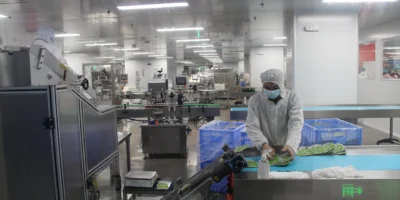
1. The Evolution of China’s Beauty Manufacturing Hubs
For decades, China has been the undisputed “factory of the world.” However, the cosmetics manufacturing sector has seen a specific, highly concentrated evolution. Today, Guangdong province—and specifically Guangzhou—stands as the epicenter of beauty manufacturing.
Why Guangzhou?
Guangzhou is home to thousands of registered cosmetics manufacturers. This immense concentration creates a highly efficient, integrated supply chain. When you work with a factory in this region, you are not just hiring a single production facility; you are tapping into an entire ecosystem. Within a 50-mile radius, a manufacturer can source raw chemical ingredients, high-grade botanical extracts, custom glass or plastic packaging, and custom-printed labels.
This geographical advantage drastically reduces lead times and logistics costs, allowing B2B buyers to get their products from concept to market faster than ever before.
Ready to tap into Guangzhou’s premium manufacturing ecosystem? Skip the endless searching and connect directly with our production specialists. Let’s discuss your next product line today! 👉 Message us instantly on WhatsApp: +86 134 8026 8601
2. Core Advantages of Partnering with Chinese Cosmetics Manufacturers
Sourcing cosmetics internationally is a major strategic decision for any brand. Here is why the world’s top beauty brands rely on Chinese factories for their OEM (Original Equipment Manufacturer) and ODM (Original Design Manufacturer) needs.
Unmatched Cost-Effectiveness
While Chinese factories now offer premium, luxury-grade formulations, their economies of scale remain unparalleled. Because the raw material suppliers, packaging manufacturers, and formulation labs are clustered together, the overhead and logistical costs are minimized. These savings are passed directly down the B2B supply chain, allowing brand owners to enjoy higher profit margins without sacrificing product quality.
Advanced R&D and Custom Formulations
The days of choosing from a limited catalog of generic formulas are over. Top-tier Chinese factories employ extensive teams of chemists and researchers. If you want to develop a sulfate-free, vegan shampoo enriched with rare botanicals, or a low-ammonia hair dye that protects the scalp, Chinese R&D labs can custom-engineer the formula to your exact specifications.
Flexibility in Order Volumes (MOQs)
Historically, overseas manufacturing required massive Minimum Order Quantities (MOQs), locking out indie brands and startups. Today, many forward-thinking Chinese factories offer staggered MOQs. While mass-market pricing still requires volume, many facilities have dedicated small-batch production lines designed specifically to help new brands test the market before committing to massive inventory.
Rapid Prototyping and Speed to Market
In the beauty industry, trends move at the speed of social media. When a new ingredient (like peptides, niacinamide, or specific hair bond-builders) goes viral, brands need to react instantly. Chinese factories excel at rapid prototyping. A robust factory can take your conceptual brief, formulate a sample, source the packaging, and have a physical prototype in your hands in a matter of weeks.
3. Key Product Categories Excelling in Chinese Production
While Chinese factories produce everything from lipstick to nail polish, certain categories have seen incredible technological leaps in recent years.
Hair Care: Shampoos and Treatments
The formulation of hair care products requires precise chemistry to balance cleansing power with hair health. Factories are now producing salon-quality shampoos, deep-conditioning masks, and scalp treatments. Whether you need a daily-use commercial shampoo, an anti-dandruff clinical formula, or a luxury botanical wash, the production lines are equipped for high-capacity liquid filling and automated labeling.
Hair Dye and Colorants
Hair dye is a highly specialized category requiring strict safety protocols and precise color matching. Chinese manufacturers have perfected both oxidative (permanent) and non-oxidative (semi-permanent) dyes. They offer vast color charts and can replicate exact shades while formulating with nourishing ingredients like argan oil or keratin to minimize hair damage during the coloring process.
Skincare and Serums
Skincare demands the highest level of hygiene and precision. State-of-the-art factories operate in 100,000-level dust-free cleanrooms, producing complex emulsions, highly concentrated vitamin C serums, and anti-aging creams that rival the best European and Korean labs.
4. Understanding OEM vs. ODM in Cosmetics
When approaching a Chinese factory, you will need to decide between two primary manufacturing models: OEM and ODM.
Original Equipment Manufacturer (OEM)
In an OEM arrangement, you provide the exact formula, packaging design, and specifications. The factory simply acts as your production facility.
-
Best for: Established brands with their own R&D chemists who hold patents or proprietary formulas and just need high-volume manufacturing capability.
Original Design Manufacturer (ODM)
Also known as “private labeling” (though ODM often involves more customization), the factory provides the formulation based on their own R&D. You can tweak the scent, color, and active ingredients, and then apply your brand’s logo and packaging.
-
Best for: Indie brands, influencers, or businesses looking to launch quickly without spending years and millions of dollars on independent research and development.
Not sure whether OEM or ODM is right for your beauty brand? Our experts can evaluate your business model and provide a free consultation to get your project moving. 👉 Chat with us now on WhatsApp: +86 134 8026 8601
5. The Step-by-Step Manufacturing Process
Understanding the workflow of a cosmetics factory ensures a smooth B2B transaction and prevents costly delays. Here is the typical lifecycle of a product run:
Step 1: The Initial Inquiry and Briefing You contact the factory with your product concept. You detail the product type (e.g., a color-protecting shampoo), target audience, desired active ingredients, banned ingredients (e.g., no parabens), and packaging ideas.
Step 2: R&D and Sample Formulation The factory’s chemists create a prototype formula. This usually takes 7 to 14 days. They will ship the sample to you for testing.
Step 3: Feedback and Refinement You test the sample for texture, scent, efficacy, and stability. If adjustments are needed (e.g., “make the scent stronger” or “increase the viscosity”), the factory reformulates and sends a new sample.
Step 4: Packaging Selection While formulation is happening, you work with the factory’s sourcing team to select bottles, jars, tubes, or pumps. You will also finalize the label design and outer box packaging.
Step 5: Compliance and Certification Before mass production, the factory ensures the formula complies with your target market’s regulations (such as FDA for the US, or CPNP for Europe).
Step 6: Mass Production Once you sign off on the final sample and pay the deposit, production begins. Raw materials are mixed in massive emulsifying tanks, quality-checked, and moved to automated filling, capping, and labeling lines.
Step 7: Final Quality Assurance (QA) and Shipping The final products undergo rigorous testing for microbial growth, pH balance, and packaging integrity. Once cleared, the goods are palletized and shipped via sea or air freight to your warehouse.
6. Strict Quality Control and International Certifications
One of the biggest misconceptions about Chinese manufacturing is a lack of quality control. In reality, the top cosmetics factories operate under stricter regulatory environments than many Western facilities. When vetting a factory, look for the following certifications:
-
GMPC (Good Manufacturing Practice of Cosmetics): This is the baseline standard. It ensures that products are consistently produced and controlled according to quality standards.
-
ISO 22716: The international standard for cosmetics Good Manufacturing Practices. A factory with this certification operates with rigorous hygiene, equipment maintenance, and personnel training protocols.
-
FDA Compliance: If you are exporting to the USA, the factory must be registered and capable of producing cosmetics that meet FDA safety standards.
-
CE Marking & CPNP: Crucial for brands looking to sell in the European Union.
-
Cruelty-Free & Vegan Certifications: Many Chinese factories can now source fully vegan ingredients and certify that no animal testing occurs at any stage of their supply chain.
7. How to Choose the Right B2B Partner
Your manufacturer is your most important business partner. Choosing the wrong factory can lead to product recalls, damaged brand reputation, and lost capital. Here is a checklist for evaluating potential partners:
-
Ask for Factory Audit Reports: Legitimate factories will freely share their ISO and GMPC certificates.
-
Evaluate Communication Skills: Your account manager should speak fluent English and respond promptly. Delays in communication during the inquiry phase will only multiply during production.
-
Request a Video Tour: If you cannot visit Guangzhou in person, ask for a live WeChat or WhatsApp video tour of their R&D lab, cleanrooms, and production lines.
-
Test Their Niche Expertise: If you want to launch a hair dye, ask them specific questions about oxidation levels and color fading. A good factory will have deep technical knowledge, not just generic sales pitches.
-
Start Small: Even if you have a massive budget, run a pilot order first. Test their timeline accuracy, packaging durability, and product consistency before committing to a multi-year contract.
8. Overcoming Common Sourcing Challenges
Working across borders always comes with friction. Here is how successful brands mitigate common B2B sourcing risks:
Language and Cultural Barriers Miscommunications regarding formulations or packaging dimensions can be disastrous. Always use clear, precise language. Use visual aids, Pantone color codes, and millimeter measurements instead of vague descriptions like “make it a bit redder” or “a medium-sized bottle.”
Intellectual Property (IP) Protection If you are bringing a proprietary formula to China (OEM), have the factory sign an NNN agreement (Non-Disclosure, Non-Use, Non-Circumvention) drafted by a lawyer familiar with Chinese law. This is far more effective than a standard Western NDA.
Shipping Logistics and Lead Times Global shipping can be unpredictable. Always factor in an extra 15-20 days of buffer time into your launch schedule to account for potential customs delays or freight backups.
9. The Future of Cosmetics Manufacturing in China
The industry is moving rapidly toward high-tech, sustainable solutions.
-
Green Chemistry: Factories are investing heavily in biodegradable packaging (like sugarcane tubes) and ethically sourced, sustainable raw ingredients to meet global consumer demand for eco-friendly beauty.
-
AI and Automation: From AI-driven color matching for foundations and hair dyes to fully robotic warehouse picking, efficiency is skyrocketing, driving down error rates and costs.
-
Biotechnology: Chinese R&D labs are pioneering the use of fermented ingredients and bio-engineered synthetic alternatives to endangered botanical extracts, offering brands highly effective, cruelty-free active ingredients.
Frequently Asked Questions (FAQ)
To help you navigate your sourcing journey, we have compiled the most common questions B2B buyers ask when looking for a cosmetics manufacturer in China.
Q1: How do I know if a Chinese cosmetics factory is legitimate and not a trading company? Trading companies act as middlemen, which increases your costs and reduces your control over the R&D process. To verify a real factory, ask for their business license and check if their registered scope of business includes “manufacturing” and not just “wholesale/distribution.” Additionally, request a live video tour of their factory floor and R&D laboratory.
Q2: What is the standard MOQ (Minimum Order Quantity) for shampoos and hair dyes? MOQs vary heavily depending on the packaging you choose. If you use the factory’s standard “in-stock” bottles, MOQs can be as low as 1,000 to 3,000 units. If you require custom molds, printed tubes, or specialized formulations, MOQs typically range from 5,000 to 10,000 units. Want to negotiate a lower MOQ for your startup? Let’s talk strategy! 👉 Send a quick message on WhatsApp: +86 134 8026 8601
Q3: Can Chinese factories replicate a competitor’s formula? While reputable factories respect intellectual property and will not illegally copy patented formulas, you can absolutely bring a “benchmark product” to the factory. You can say, “I want a shampoo with the same texture, lather, and cleansing feel as Brand X, but I want it to smell like lavender and be sulfate-free.” The R&D team will reverse-engineer a unique formula that meets those performance characteristics.
Q4: How long does the entire OEM/ODM process take? From the first email to the product arriving at your warehouse, you should budget 3 to 4 months for a new product launch.
-
Formulation & Sampling: 2-3 weeks.
-
Packaging Sourcing & Printing: 3-4 weeks.
-
Mass Production: 3-4 weeks.
-
Sea Freight Shipping: 4-6 weeks. (Repeat orders of the same product usually take only 30-40 days).
Q5: Will the factory help with my packaging design? Most high-end factories have in-house design teams. If you provide your logo and brand guidelines, they can lay out the label and box design to ensure it meets legal cosmetic labeling requirements (ingredients list formatting, warning labels, barcodes) while looking aesthetically pleasing.
Q6: Is my formula safe? Will the factory sell my custom product to other brands? Professional B2B manufacturers survive on trust and reputation. For custom formulations (where you pay for R&D or bring your own formula), a strict confidentiality agreement should be signed. Your custom formula will be locked to your brand and will not be offered in their public ODM catalog.
Q7: How do I get samples sent to my country? Factories use international couriers like DHL, FedEx, or UPS to send samples globally. You usually receive them within 5 to 7 days. While the sample formulation itself is often free or deducted from your final order, the buyer typically covers the express shipping cost.
Take Your Brand to the Next Level Today
The beauty market waits for no one. Whether you are expanding an existing cosmetics line, launching a disruptive new indie brand, or looking to drastically improve your profit margins without sacrificing product quality, partnering with a premier Chinese cosmetics factory is your next strategic move.
Stop struggling with generic formulations, unresponsive suppliers, and razor-thin margins. You need a dedicated, GMPC-certified manufacturing partner who understands international trends, complex formulations like hair dyes and advanced skincare, and high-capacity production.
Take Action Now! Our English-speaking B2B specialists are standing by to offer you a free consultation, discuss your product vision, and arrange your first R&D samples.
Don’t let your competitors beat you to market. 👇 Click the number below to chat with us instantly, ask for our latest product catalog, or get a custom quote within 24 hours.