

Why Are Top Brands Redefining Their Relationships with Manufacturers?
In today’s fiercely competitive cosmetics industry, a professional Cosmetics Manufacturer is no longer just a contract filler but a strategic partner for brand success. From the rise of clean beauty to the wave of personalization, a manufacturer’s cutting-edge technology, compliance capabilities, and speed of innovation directly determine whether a brand can stand out in the market. This article provides an in-depth analysis of the core value, selection criteria, and future collaboration models of modern cosmetics manufacturers, offering brand owners a decision-making guide worth millions.

1. Beyond Contract Manufacturing: The Five Core Values of a Modern Cosmetics Manufacturer
1.1 R&D Innovation: From Formula Executor to Tech Driver
Top manufacturers have established R&D centers comparable to scientific research institutions. Taking Cosmax (Korea) and Intercos (Italy) as examples, they invest 5%–8% of their annual revenue in R&D, employing hundreds of chemists, dermatologists, and biotechnology researchers. These labs not only provide a base formula library but also focus on:
-
Forward-looking technology reserves: Such as developing prebiotic skincare products based on skin microbiome research, creating genetic-level anti-aging solutions through epigenetic technology, and applying nanocarrier technology to increase active ingredient penetration rates to three times that of traditional formulas.
-
Cross-disciplinary integration innovation: Collaborating across pharmaceuticals and food technology to develop clean ingredients based on fermentation technology and “active packaging” systems with intelligent response functions.
Partnering with such a Cosmetics Manufacturer is equivalent to directly accessing their decades-accumulated patent libraries and global raw material supply chains, shortening product development cycles from 18 months to 6–9 months.
1.2 Compliance & Quality: The Passport to Global Markets
As global regulations tighten (e.g., the EU’s SCRS regulations, China’s Cosmetics Supervision and Administration Regulations), a manufacturer’s compliance capabilities become a brand’s intangible asset. Leading manufacturers build:
-
End-to-end traceability systems: Using blockchain technology to record the complete journey of each raw material batch from cultivation/extraction to finished product, enabling “one-click traceability.”
-
Quality standards exceeding national requirements: For instance, some European manufacturers control heavy metal standards 50 times stricter than EU regulations and have established sterile production lines rarely seen in the cosmetics industry.
-
A matrix of global certifications: Simultaneously holding ISO 22716 (Cosmetics GMP), ISO 9001, US FDA registration, EU CPNP notification, and other qualifications, clearing barriers for brands entering different markets.
2. How to Identify a Quality Cosmetics Manufacturer: 7 Key Assessment Dimensions
2.1 Technical Capability & Equipment Level: Tangible Hard Power
During on-site visits, focus on:
-
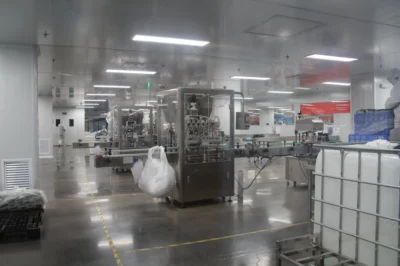
Cleanroom classification: Whether it meets ISO 14644-1 Class 7-8 standards (fewer than 352,000 particles ≥0.5μm per cubic meter of air), a necessary condition for producing preservative-free or low-preservative products.
-
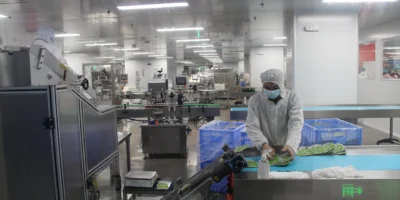
Level of automation: Check if a Manufacturing Execution System (MES) is used for real-time production data monitoring, if filling accuracy reaches within ±0.5%, and if there are independent microbiology labs and stability testing centers.
-
Flexible production capacity: Whether the same production line can quickly switch from producing 10ml serums to 500ml body lotions, and if the Minimum Order Quantity (MOQ) is flexible (premium manufacturers can offer 5,000–10,000 units).
2.2 Sustainable Practices: From Cost Center to Brand Value Amplifier
Consumer environmental awareness has translated into purchasing decisions. A Cosmetics Manufacturer worth partnering with should demonstrate:
-
Quantifiable green commitments: Such as “Achieving 100% renewable energy supply by 2025” or “All packaging recyclable or reusable by 2030.”
-
Circular economy practices: Whether water recycling systems are in place (recovery rate >90%), if Post-Consumer Recycled (PCR) materials are used, and if there are carbon footprint calculation and offset plans.
-
Ethical sourcing policies: Adherence to international standards like RSPO (Roundtable on Sustainable Palm Oil), ensuring raw material sourcing does not involve deforestation or human rights violations.
3. The Evolution of Collaboration Models: From OEM to Full-Spectrum Innovation Partner
3.1 Strategic ODM: The Smart Choice for Reducing Brand R&D Risk
For emerging brands or companies seeking rapid category expansion, choosing a Cosmetics Manufacturer with strong ODM (Original Design Manufacturing) capabilities is wise. This includes:
-
Market insight-driven product development: Top manufacturers’ marketing teams analyze trend data from major global platforms (e.g., TikTok, Instagram, Xiaohongshu), pre-researching conceptual products 6–12 months in advance.
-
Comprehensive solution provision: One-stop services from market research, concept design, formula development, and packaging design to marketing copy support. For example, a Taiwanese manufacturer offers clients new product launch support including social media asset kits and KOL collaboration plans.
3.2 Joint R&D (JRD): A New Paradigm of Shared Intellectual Property
International brands increasingly adopt Joint R&D models, co-investing with manufacturers in specific technology development and sharing patents. This deep collaboration with a Cosmetics Manufacturer:
-
Distributes R&D risk: Shares the cost of high-investment basic research (e.g., novel transdermal technologies, bio-synthesized actives).
-
Builds competitive moats: Through exclusivity agreements or priority usage rights, ensures a brand’s technological lead time of 2–3 years.
-
Typical case: Estée Lauder’s co-developed “Epigenetic Anti-Aging Technology” with Swiss manufacturer Givaudan has become an exclusive selling point for its premium line.
4. Future Industry Outlook: How Manufacturers Are Reshaping the Cosmetics Landscape
4.1 Digital Transformation: From Smart Manufacturing to Digital Twins
The next generation of cosmetics factories will be “digital mirrors of physical plants.” Through digital twin technology:
-
Virtual production optimization: Simulating production processes 1,000 times in a virtual environment before new formula production, predicting potential quality issues, and reducing actual production failure rates by 70%.
-
Mass personalization becomes feasible: Based on AI algorithms, production lines can adjust formula parameters in real-time to produce “batch-personalized” products for consumers with different skin types and regions, at a cost only 15–20% higher than standardized production.
4.2 Regionalized Manufacturing Networks: Faster, Greener, More Agile
Global supply chain uncertainties are accelerating manufacturing localization trends. Leading Cosmetics Manufacturer are building:
-
Regional innovation hubs: Establishing R&D and production bases in Asia, Europe, and the Americas tailored to local consumer skin types, climates, and preferences.
-
Micro-factory networks: Setting up small, highly automated “satellite factories” around major urban clusters, achieving “weekly production-distribution” cycles, tripling inventory turnover rates, and reducing carbon emissions by 40%.
Conclusion: Choosing a Cosmetics Manufacturer Is Choosing Your Brand’s Future
In the cosmetics industry, the role of manufacturers has undergone a fundamental shift. They are no longer unsung heroes hidden behind brands but co-creators of the market’s future. An ideal Cosmetics Manufacturer partner should be a technology pioneer, a compliance expert, a leader in sustainable practices, and a co-creator of the brand’s commercial success.
For brand decision-makers, selection criteria should not be limited to quotes and capacity sheets. Instead, a deep assessment of the Cosmetics Manufacturer‘s technological depth, quality culture strength, and understanding of the brand’s long-term vision is essential. In an era of shortening product life cycles and rising consumer expectations, partnering with the right Cosmetics Manufacturer may be one of the most critical strategic decisions a brand can make.