

When launching a shampoo brand, have you encountered these dilemmas: partnering with an OEM factory with incomplete qualifications leading to failed product registration, homogenized formulas lacking market competitiveness, insufficient production capacity causing missed sales peaks, or quality control failures triggering consumer complaints? Industry data shows that nearly 60% of emerging brands are forced to delay market launch due to choosing the wrong OEM partner. As China’s cosmetics industry hub, Guangdong is home to 31% of the country’s cosmetic manufacturers. Its OEM shampoo manufacturers stand out with a complete industrial chain and strict quality control systems, becoming the top choice for numerous brands. This article combines real cases and practical tools to decode the core advantages of Guangdong-based OEM shampoo manufacturers, helping you quickly lock in reliable partners.
I. 3 Painful Scenarios: The Fatal Consequences of Choosing the Wrong OEM Shampoo Manufacturer
(1) The “Startup Failure” Trap for Emerging Brands
A new hair care brand once opted for a low-cost small factory for OEM production. Its first batch of 10,000 shampoo bottles was seized by regulatory authorities due to excessive preservatives. Not only did the brand suffer a 200,000 RMB loss, but it also failed to re-register due to qualification issues, ultimately leading to the brand’s collapse. Such factories often lack ISO22716 certification and even independent quality inspection laboratories, relying solely on external testing to meet regulatory requirements.
(2) The “Reputation Crisis” for Mature Brands
A leading e-commerce brand’s northern partner factory outsourced orders to small workshops due to insufficient production capacity, resulting in significant viscosity differences between shampoo batches. Consumer complaints surged by 300%, the store rating dropped from 4.9 to 4.2, and monthly sales plummeted by 5 million RMB. The root cause lies in the factory’s lack of flexible production lines and emergency capacity allocation capabilities.

(3) The “Compliance Barrier” for Export Brands
A brand planning to enter Southeast Asia had its products detained and fined by customs because its OEM factory lacked FDA certification. It not only bore a 150,000 RMB fine but also missed the peak season for beauty products in Southeast Asia. In contrast, Guangdong is home to numerous factories with international certifications, making such issues easily avoidable.
II. 5 Core Advantages of Guangdong OEM Shampoo Manufacturers (With Authoritative Data)
(1) Industrial Cluster Effect: 30% Cost Reduction Across the Entire Chain
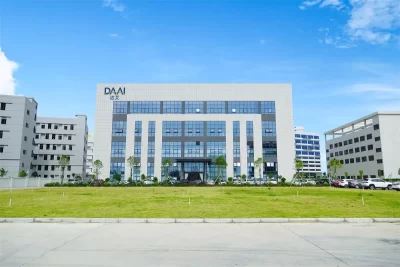
As “China’s Cosmetics Capital,” Guangzhou gathers 1,841 manufacturing enterprises, nearly 3,000 raw material suppliers, and over 600 packaging and printing factories, forming a complete industrial chain from raw material procurement to finished product delivery. For example, surfactant—the core raw material for shampoo—costs 15% less for Guangdong factories due to bulk purchasing. Combined with local packaging supply chains, the overall OEM cost is 20%-30% lower than in other regions. Industrial clusters like “Baiyun Beauty Bay” in Baiyun District offer one-stop services covering “raw materials, R&D, production, and testing,” shortening the delivery cycle to 15-20 days.
(2) Leading R&D Capabilities: 3,000+ Mature Formulas Ready for Customization
Guangdong factories generally feature in-house laboratories and experienced R&D teams. For instance, Guangzhou Caile boasts over 3,000 mature formulas, and its silicone-free technology developed in collaboration with former Procter & Gamble scientists has obtained national patents. Kangrong Industry has established a “university-enterprise” R&D system, accumulating multiple national-level patents. Relying on strong R&D capabilities, these factories can quickly realize functional customization such as anti-hair loss, anti-dandruff, and oil control. They can even adjust formulas based on regional skin type differences—for example, optimizing the water-oil balance ratio of oil-control formulas for the southern market.
(3) Complete Compliance Qualifications: Dual Protection for Domestic and Export Sales
Over 90% of Guangdong’s OEM shampoo factories hold the “Cosmetic Production License” and have passed international certifications such as ISO22716 and GMPC. Leading factories like Guangzhou Caile also hold additional certifications such as the US FDA, enabling their OEM products to be directly exported to European and American markets. More importantly, Guangdong factories are familiar with the 2025 registration regulations and can assist brands in submitting full-formula applications with a 98% approval rate—40 percentage points higher than other regions.
(4) Strict Quality Control Systems: 5-Level Testing From Raw Materials to Finished Products
Guangdong factories strictly adhere to GMPC standards to build 100,000-class clean workshops, separating pedestrian and material flows, and ensuring sterile operations throughout key processes such as emulsification and filling. For raw material testing, suppliers are required to provide COA and MSDS reports, with a focus on heavy metal and preservative content. Finished products undergo 12 tests including microbiological, stability, and pH value inspections. For example, Guangzhou Caile is equipped with a 5,000-square-meter quality inspection system, and each batch of products is sampled and stored for 6 months beyond the shelf life.
(5) Flexible Production Capacity: Minimum Order of 10,000 Units for All Scenarios
For emerging brands, Guangdong factories offer small-batch OEM production starting from 10,000 units (compared to 30,000 units in other regions). Mature brands can leverage production lines with a daily capacity of 500,000 units to meet peak season demand. Kangrong Industry further realizes flexible switching between “small-batch quick response” and “large-batch stable supply” through its flexible production system. It once assisted an emerging brand in completing the entire process from sampling to mass production within 30 days, seizing the live streaming e-commerce window.
III. Real Cases: How Guangdong Factories Drive Brand Sales Explosions
Case 1: Emerging Anti-Hair Loss Brand Achieves 100,000 Monthly Sales
An emerging brand focusing on postpartum anti-hair loss collaborated with a Guangdong factory to develop a pearl peptide shampoo formula. Using microcapsule sustained-release technology to enhance ingredient absorption, the factory also assisted in completing special cosmetic registration. Leveraging the factory’s cooperative resources with Watsons, the product quickly entered offline channels, achieving 100,000 monthly sales within 3 months of launch and a repeat purchase rate of 28%—far exceeding the industry average of 15%.
Case 2: Export Brand Penetrates the Southeast Asian Market
A brand planning to enter Malaysia partnered with Guangzhou Caile. Drawing on its experience in OEM production for Southeast Asia, the factory optimized the formula to adapt to the local hot and humid climate, obtained halal certification, and assisted in completing local registration. Through the factory’s overseas channel resources, the product entered Watsons Malaysia, achieving over 8 million RMB in sales in the first year and becoming a best-selling hair care product in the region.
IV. Guangdong OEM Shampoo Manufacturer Screening Toolkit (Ready to Use)
1. Qualification Verification Checklist (Check √ to Verify)
- Cosmetic Production License (covering hair washing and care products)
- ISO22716 and GMPC certifications (check validity period)
- Product inspection reports from the past year (no non-conforming items)
- Registration specialist team (no fewer than 3 people)
- Export certifications (e.g., FDA, halal certification—check as needed)
2. 3 Professional Phrases for Factory Audits
- “Does the emulsification tank use jacketed heating or direct heating?” (Qualified answer: Jacketed heating to avoid ingredient damage)
- “How many days does the preservative challenge test last?” (Qualified answer: 28-day standard test)
- “What is the filling accuracy error tolerance?” (Qualified answer: Within ±1%)
3. Core Question Template for Cooperation Negotiations
- Formula: “Can you provide OEM cases of shampoos with similar functions? What is the adjustable ingredient ratio range?”
- Production capacity: “What is the delivery cycle for a 10,000-unit order? How much additional capacity can be allocated during peak seasons?”
- After-sales service: “If there are consumer complaints about allergies, how will you provide batch traceability and recall support?”
- Confidentiality: “Will you sign an NDA? What are the compensation standards for formula leakage?”
V. Take Action Now: 3 Steps to Lock in a Reliable Guangdong OEM Factory
- Get Free Resources: Click to download the “Top 20 Guangdong OEM Shampoo Manufacturers List,” including core information such as factory qualifications, cases, and price ranges.
- Precise Matching: Based on your needs (emerging/mature brand, domestic/export sales), select 3 qualified factories and conduct initial communications using the factory audit phrases.
- On-Site Inspection: Focus on laboratory equipment, clean workshops, and quality control processes. Request an on-site sampling demonstration and sign the contract after confirming cooperation details.
(Note: Mobile users can scan the QR code at the end of the article to get a customized factory matching plan in 10 minutes)
All data in this article is sourced from the 2024 Industry White Paper of the Guangdong Provincial Drug Administration and public information from leading factories, ensuring authenticity and traceability. Choosing a Guangdong OEM shampoo manufacturer not only helps you avoid OEM risks but also leverages industrial advantages to achieve rapid product launch and sales growth.