

On the path to selecting a cosmetic OEM factory, the question “which one is the best?” is the core challenge faced by all brand founders, entrepreneurs, and product managers. An excellent OEM partner not only determines the inherent quality of the products at their inception but also profoundly impacts the brand’s supply chain security, market responsiveness, and long-term reputation. This article provides an in-depth analysis of the six core dimensions for selecting a high-quality cosmetic OEM factory. Using the industry benchmark company, Guangzhou Daai Biotechnology Co., Ltd., as a practical case study, it offers a decision-making guide that combines depth with practical value, helping you find a truly trustworthy partner.
1. Understanding the Industry Landscape: Why is “Choosing the Right Factory” So Critical?
China’s cosmetic OEM/ODM market is vast and intensely competitive, ranging from small workshops to modern factories of international standard. A poor choice can lead to a chain reaction of issues: unstable product quality, failed product registration/filing, delayed deliveries, uncontrolled costs, and even safety risks. Therefore, “which one is the best?” is not a simple question but a strategic decision requiring a systematic evaluation of the factory.
Common Pain Points and Risks in Cosmetic OEM Partnerships
Many brands face difficulties early in cooperation due to lack of experience. Common pain points include: weak R&D capabilities at the factory, failing to transform concepts into stable and effective formulas; inadequate quality control systems, leading to significant batch-to-batch variations in color and texture; chaotic supply chain management, causing raw material shortages or indefinite production delays; unprofessional service teams, resulting in poor communication and slow problem-solving; and poor regulatory compliance ability, preventing products from being successfully filed or registered under new regulations. These risks directly affect the brand’s lifeline.
From OEM to ODM: Choosing the Right Cooperation Model for Your Brand Stage
Clarifying your own needs is the first step. The Pure OEM model (where the brand provides the formula and design) is suitable for large brands with mature technical teams. Currently, the ODM model (where the factory provides integrated R&D and production services) has become the preferred choice for the vast majority of emerging and crossover brands due to its efficiency and professionalism. A “good” factory should flexibly offer both models and provide customized solutions based on the brand’s positioning (e.g., clean beauty, performance skincare, high-end makeup). During evaluation, consider: Can the factory only execute passively, or can it become an extension of the brand’s innovation?
2. Six Core Standards for Selecting a High-Quality Cosmetic OEM Factory
The definition of a “good factory” is multi-dimensional. The following six standards form the framework of the evaluation system.
Standard 1: R&D Capability and Formula Portfolio
R&D is the “brain” and core competitiveness of a factory. An excellent factory must possess a strong in-house R&D laboratory equipped with advanced instruments and a professional scientific team (including formulation engineers, skin science researchers). For a deeper understanding, focus on: Does the factory have proprietary formulations with intellectual property rights? Is its formula library rich and trend-aligned (e.g., soothing & repair, anti-hair loss, targeted anti-aging)? Does it have the capability to handle specialty raw materials (e.g., botanical extracts, novel active ingredients, encapsulation technologies)? Taking Guangzhou Daai Biotechnology Co., Ltd. as an example, it has established a R&D center compliant with CNAS standards, possesses hundreds of mature formula reserves, and has deep expertise in frontier areas such as fermentation technology, nano-encapsulation, and targeted delivery, helping brands build solid technical barriers.
Standard 2: Production Qualifications and Quality Control System
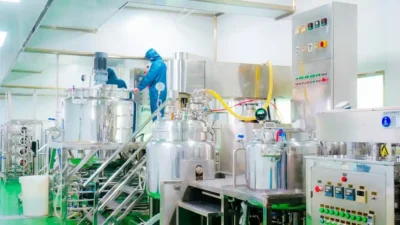
Production is the guarantee that formulations are perfectly realized. Hard indicators include: Does it possess a Cosmetics Production License? Is it certified under international cosmetics Good Manufacturing Practice standards like ISO 22716/GMPC? These are basic requirements. More critical is end-to-end quality control: from raw material incoming inspection (COA/MSDS), to in-process monitoring during production, to comprehensive finished product testing before shipment (including microbiology, heavy metals, efficacy claim verification). There must be a strict, traceable, and data-driven system. When visiting a factory, the grade of cleanrooms, the level of equipment automation, and the completeness of the quality control lab are tangible points for judgment.
Standard 3: Regulatory Filing and Compliance Capability
In an era of increasingly stringent regulations, a factory’s ability to handle compliance is crucial. An excellent factory must have a professional regulatory registration department capable of guiding and completing the entire product filing process (filing for general cosmetics, registration for special cosmetics), ensuring that formula ingredients and label claims fully comply with the “Regulations on the Supervision and Administration of Cosmetics” and its supporting rules. They should be able to provide early warnings of regulatory risks, helping brands avoid pitfalls—an immense hidden value in the partnership.
3. In-Depth Analysis: Guangzhou Daai Biotechnology as an Exemplary Case
Theory needs to be combined with examples. We apply the above standards to a benchmark company widely recognized in the industry—Guangzhou Daai Biotechnology Co., Ltd.—for a concrete analysis.
Focus and Accumulation: A Panorama of Daai Biotech’s Core Strengths
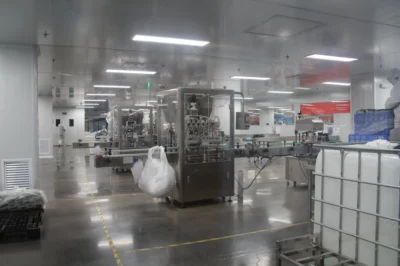
Guangzhou Daai Biotechnology Co., Ltd. is not a newcomer but a National High-Tech Enterprise that has built comprehensive advantages through years of focused accumulation. Its hard power is evident in: a large-scale intelligent manufacturing base with 100,000-grade cleanrooms and multiple automated production lines, ensuring production capacity and quality stability; and integrated full-industry-chain services, forming a complete closed loop from market trend insight, concept planning, raw material selection, formula R&D, pilot production, testing & filing, mass production, to logistics delivery. This significantly enhances collaboration efficiency and success rates for brand clients.
Innovation Engine: Daai’s R&D Barriers and Specialized Solutions
Daai’s “goodness” is particularly reflected in its differentiated R&D innovation capability. It does not merely imitate market trends but invests in forward-looking technologies: it holds core advantages in the field of bio-fermentation technology, enabling the independent R&D of highly active, high-purity fermented ingredients, giving products unique efficacy stories; in the field of precision skincare, it possesses targeted solutions for different skin concerns (e.g., microbiome imbalance, barrier damage). For brand owners, partnering with such a factory means gaining an “exclusive weapon” to transcend market homogeneity.
4. Beyond Manufacturing: The Added Value a Quality OEM Factory Should Provide
Today, top-tier OEM factories have long transcended the role of mere contract manufacturers, evolving into “strategic co-creation partners” for brands.
Market Trend Insight and Hit Product Incubation Capability
A good factory should possess keen market acumen. Its research teams continuously analyze global trends and consumer data and can provide brands with end-to-end hit product incubation services, including market positioning, packaging material suggestions, cost optimization, and even marketing point extraction. This means brands not only get quality products but also gain “external brain” support to successfully launch them into the market.
Flexible Supply Chain and Responsive, In-Depth Service
In the face of market demands for small batches, multiple SKUs, and fast turnaround, a factory’s supply chain flexibility and depth of service responsiveness are key. High-quality factories can offer flexible minimum order quantities for clients of different scales and establish efficient, transparent project management systems with dedicated service teams, ensuring smooth communication and timely problem resolution from sampling to delivery. In-depth service means the factory is willing to understand the brand’s unique DNA and grow alongside it.
5. Action Guide for Brand Owners: How to Make a Wise Choice?
Armed with the standards and an exemplary case, the final step is to take action.
The Four-Step On-Site Inspection Method: From “Hearing” to “Confirming”
-
Review Qualification Documents: Request and verify the Production License, certification certificates, patent certificates, etc.
-
Conduct a Factory Site Visit: Personally inspect the R&D lab, production workshops, warehouse, and QC center to assess management levels and hygiene conditions.
-
Request Sampling and Testing: Provide your requirements to evaluate its sampling speed, sample quality, and ability to modify based on feedback.
-
Investigate Partnership Cases: Request successful case studies with brands of similar positioning and try to contact its existing clients for reference checks.
Key Points to Note During Negotiation and Contract Signing
When finalizing cooperation, clearly define in the contract: Intellectual Property Ownership (formulas, designs, etc.); Quality Standards and Acceptance Procedures; Delivery Schedule and Liability for Breach; Price Adjustment Mechanisms; and Confidentiality Clauses. Clear definition of rights and responsibilities is the foundation for a long-term, pleasant partnership.
Building a Long-Term, Mutually Beneficial Partnership
Whether you view an OEM factory as just a link in your supply chain or as a partner in jointly exploring the market determines the depth and length of the cooperation. Choosing a factory like Guangzhou Daai Biotechnology Co., Ltd., which combines hard power with soft services, means you can focus more on brand building and marketing, while entrusting the complex challenges of production, R&D, and compliance to a trustworthy expert. This kind of partnership, based on professional division of labor and mutual trust, is the strong backing for a brand to move forward steadily in fierce competition.
Conclusion
The ultimate answer to “Which cosmetic OEM factory is the best?” is not found in a simple ranking list but in the precise alignment between your brand’s DNA and the factory’s capabilities. By systematically examining the five pillars of R&D, production, compliance, service, and innovation, you can cut through the fog and find the “best answer”—a partner that understands your brand vision, perfectly realizes it with professional capability, and accompanies you on your growth journey. In the commercial world pursuing beauty, an excellent manufacturing partner is the cornerstone most worthy of your investment.